search
Loading...
Compression Springs Compression Springs

Enter your Outside Diameter and Free Length
Hint: For larger search results, enter a bigger range of Min and Max Inputs

Outside Diameter
to
Inside Diameter
to
Free Length
to
Wire Diameter
to
Total Coils
to
Rate
to
Material Type
Max. Load
to
Max. Deflection
to
Solid Height
to
*Required Field
Extension Springs Extension Springs

Enter your Outside Diameter and Length Inside Hook
Hint: For larger search results, enter a bigger range of Min and Max Inputs

Outside Diameter
to
Length Inside Hook
to
Wire Diameter
to
Max. Load
to
Max. Deflection
to
Initial Tension
to
Rate
to
Material Type
*Required Field
Torsion Springs Torsion Springs

Enter your Outside Diameter and Total Coils
Hint: For larger search results, enter a bigger range of Min and Max Inputs

Outside Diameter
to
Inside Diameter
to
Total Coils
to
Free Position
to
Wire Diameter
to
Body Length
to
Max. Torque
to
Max. Deflection
to
Rate
to
Leg Length
to
Material Type
*Required Field
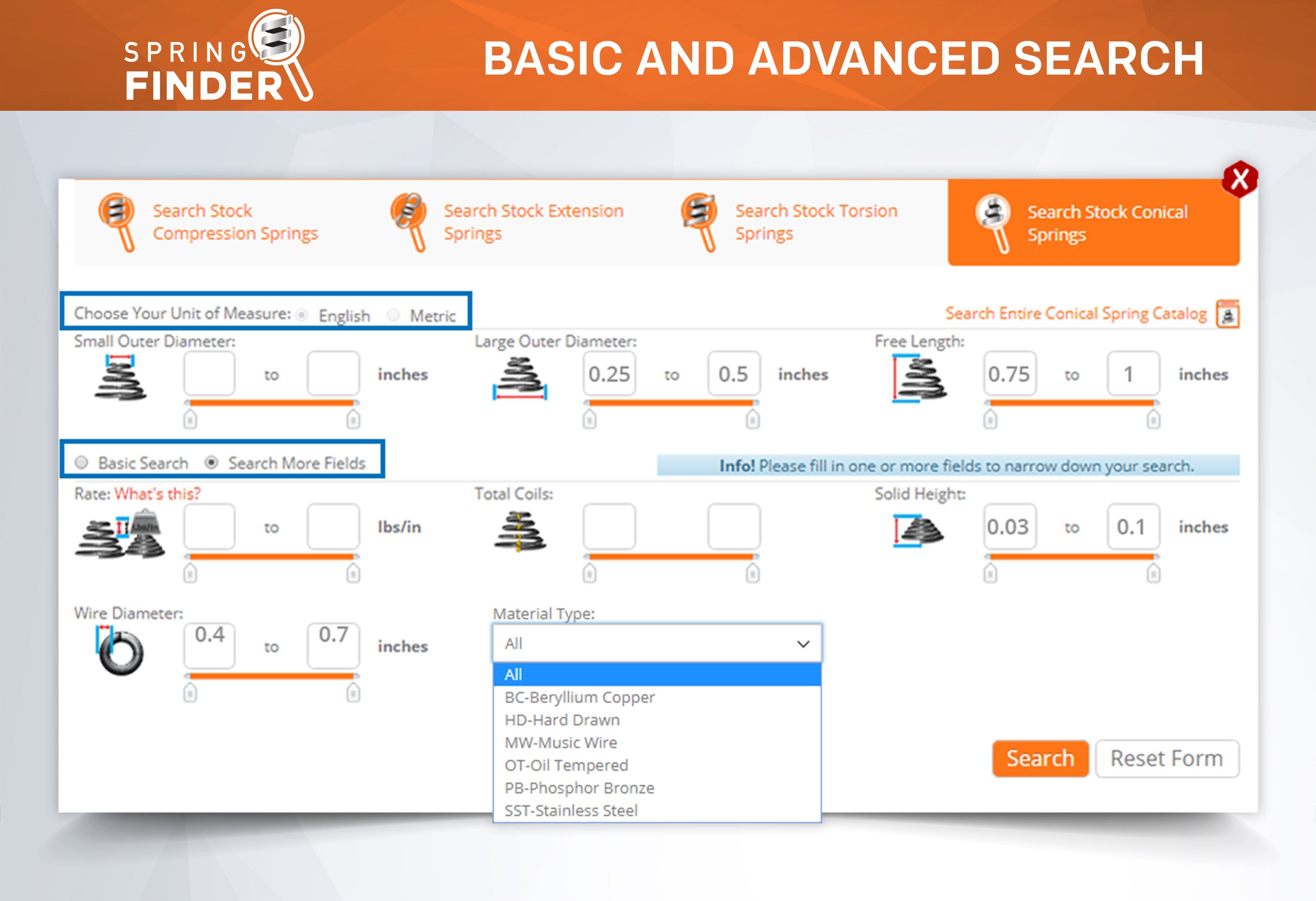
Conical Springs Conical Springs

Enter you Small Outside Diameter, Large Outside Diameter and Free Length
Hint: For larger search results, enter a bigger range of Min and Max Inputs

Small Outside Diameter
to
Large Outside Diameter
to
Free Length
to
Rate
to
Total Coils
to
Solid Height
to
Wire Diameter
to
Material Type
*Required Field

What Are Tension Springs?

What Are Tension Springs?


Tension springs, also known as extension springs, are specialized types of springs designed to operate under tension. Different to compression springs, which resist being squashed, tension springs are meant to be stretched or pulled. This fundamental difference allows tension springs to perform functions opposite to those of compression springs.

Tension springs have tightly wound coils with no pitch between them, which means there's no gap or space between the coils when the spring is at rest. When a load is applied to a tension spring, it stretches the coils apart, creating resistance against the pulling force. This resistance generates a "sling back" effect, causing the spring to return to its original shape once the force is removed. This ability to return to its original shape makes tension springs ideal for applications that require lifting heavy objects or maintaining consistent tension in a system.

For instance, in a trampoline, tension springs connect the mat to the frame, absorbing and redistributing the energy when someone jumps. Similarly, in automotive applications, tension springs help keep components like hoods and trunks securely closed. The versatility and reliability of tension springs make them a vital component in both everyday items and complex machinery.


What are the Main Characteristics of Tension Springs?


To effectively use tension springs, it's essential to understand their key characteristics. These include their design and structure, the materials they're made from, the types of hooks they use, and their size and dimensions. Each of these factors plays a significant role in determining how well a tension spring will perform in an application.


Extension Spring MeasurementsExtension Spring Measurements

Design and Structure

Tension springs are designed to handle stretching forces without compromising their integrity. The absence of pitch between the coils means there is initial tension which is tension sandwiched in between the closed coils, which allows the spring to extend smoothly over a distance without the coils interfering with each other. This seamless extension is crucial for applications that require significant movement or stretching.

The typical design of a tension spring includes coils that are free to move apart as the spring stretches. The ends of the spring are usually equipped with hooks or loops, which facilitate easy attachment to other components in a system. The overall structure is geared towards providing maximum resistance to pulling forces while maintaining flexibility and durability.


Materials Used


The performance and longevity of a tension spring are heavily influenced by the materials used in its construction. Common materials for tension springs include:


Stainless Steel 302 A313Stainless Steel 302 A313
  • Stainless Steel 302 A313: Known for its corrosion resistance, stainless steel is ideal for environments exposed to moisture, chemicals, or other corrosive elements. This makes stainless steel tension springs perfect for outdoor applications, marine environments, and industries where hygiene and cleanliness are paramount. 
Music Wire ASTM A228Music Wire ASTM A228
  • Music Wire ASTM A228: This type of wire is prized for its high tensile strength and precise performance. Music wire tension springs are often used in applications requiring consistent and accurate force application, such as in precision machinery and instrumentation.


The choice of material affects not only the spring's strength and flexibility but also its resistance to fatigue and corrosion. Selecting the right material is crucial for ensuring the spring performs reliably in its intended environment.


Hook Types


The ends of most tension springs are equipped with hooks to facilitate their attachment to other components. The type of hook used can significantly impact the spring's performance and durability. The most common hook types include:


Machine HooksMachine Hooks
  • Machine Hooks: These are hooks that provide a simple and straightforward attachment point. Machine hooks are easy to install and are widely used in various applications where quick and reliable attachment is needed. They are ideal for applications where the direction of the force is consistent. 
Cross-Over Extension SpringCross-Over Extension Spring
  • Cross-Over Hooks: Unlike machine hooks, cross-over hooks are designed to cross over the center of the spring, providing a more secure and stable attachment. This design reduces the risk of the spring detaching under load, making cross-over hooks suitable for applications where the spring will experience variable or dynamic forces.
No Hook Extension SpringNo Hook Extension Spring
  • No Hooks: In some cases, tension springs are designed without hooks to eliminate the weakest part of the spring—the hooks themselves. Instead of hooks, these springs can have screws or bolts threaded into the inner diameter ends, allowing them to be fastened securely. This method enhances the spring's durability and reduces the likelihood of failure, especially in applications involving heavy loads.


Choosing the appropriate hook type depends on the specific requirements of your application, including the direction and magnitude of the forces involved.


Size and Dimensions


Tension springs come in different sizes and dimensions to accommodate different loads and spatial constraints. Understanding the key parameters of a tension spring is essential for selecting the right one for your needs. The main dimensions to consider include:


  • Length Inside Hook: This is the length of the spring from inside of one hook to the inside of the opposite hook when no load is applied. It represents the spring's natural, unstrained state. The length inside hook is crucial for determining how much the spring can stretch under load.
  • Body Length: The length of all the coils less the hooks on both ends. While tension springs are primarily designed for stretching, understanding the body length can be important for assembly to make sure the spring fits into an assembly or product.
  • Wire Diameter: The thickness of the wire used to make the spring affects its strength and flexibility. A larger wire diameter generally means a stronger spring that can handle more significant forces, while a smaller diameter is weaker but with more flexibility.
  • Outer Diameter: This is the overall diameter of the spring. The outer diameter influences how the spring fits within a given space and can affect the spring's performance in tight or confined environments.
  • Number of Coils: The total number of coils in a tension spring determines its ability to stretch and the amount of force it can exert. More coils typically allow for greater flexibility and a lower spring constant, meaning the spring will stretch further but with less force.


How to measure a Extension SpringHow to measure a Extension Spring


Selecting the correct size and dimensions ensures that the spring operates effectively within its intended application, providing the necessary force and durability without compromising on performance.


How does Tension Springs Work?


At the heart of a tension spring's operation is Hooke's Law, a principle in physics that describes how springs behave under force. Hooke's Law states that the force exerted by a spring is directly proportional to the amount it is stretched or compressed. In the context of tension springs, which are designed to handle pulling forces, Hooke's Law is expressed as:

F = k • x

Where:

  • F = Force exerted by the spring (in pounds)
  • k = Spring constant (in pounds per inch)
  • x = Change in length from the spring's equilibrium position (in inches)

This equation means that the more you stretch the spring (x), the more force (F) it exerts in opposition. The spring constant (k) is a measure of the spring's stiffness—the higher the value of k, the stiffer the spring, and the more force it will exert for a given amount of stretch.


Load Application and Resistance


When a load is applied to a tension spring, it causes the tightly wound coils to stretch apart. The spring's resistance to this stretching force is what allows it to perform its intended function, whether that's lifting a heavy object, maintaining tension in a system, or providing a controlled return to an original position.

The amount of resistance a tension spring provides is determined by its spring constant k and the degree of stretch x. A spring with a higher k value will resist stretching more forcefully, making it suitable for applications requiring substantial force. Conversely, a spring with a lower k value will stretch more easily and give you more travel deflection, which is ideal for applications needing gentle resistance.


Return to Original Shape


One of the most remarkable features of tension springs is their ability to return to their original shape after being stretched. This "sling back" effect is crucial for applications where the spring must provide consistent force over repeated cycles. The material properties and construction of the spring ensure that it can endure repeated stretching and releasing without permanent deformation.

If one stretches a tension within its maximum travel limits, the spring will return to the original length. A tension spring cannot and should not go past its maximum deflection distance, for if you do the spring will take a set and NOT return back to its original state. This means the spring will lose tension and not be as strong as when it was purchased. The tightly wound coils and the overall structure work together to store and release energy efficiently, allowing the spring to perform its function reliably over time.


Formulas and Calculations


Selecting and utilizing tension springs effectively requires a solid understanding of the underlying physics and the ability to perform accurate calculations. This section covers the essential formulas and calculations related to tension springs, providing you with the tools needed to determine the appropriate spring for your application.

Spring Constant Calculations

The spring constant k is a critical parameter that defines the stiffness of a spring—the higher the k, the stiffer the spring. The spring constant can be calculated using the following formula:

k = Gd^4 ÷ (8D^3 * n)

Where:

  • G = Shear modulus of the material (in pounds per square inch or Pascals)
  • d = Wire diameter (in inches or meters)
  • D = Mean coil diameter (in inches or meters)
  • n = Number of active coils

Explanation of Terms:

  • Shear Modulus (G): This is a measure of the material's rigidity, indicating how much it will deform under a given stress.
  • Wire Diameter (d): The thickness of the wire used to make the spring affects its strength and flexibility.
  • Mean Coil Diameter (D): The average diameter of the coils, which influences the overall size and stretching capability of the spring.
  • Number of Active Coils (n): Active coils are those that contribute to the spring's elasticity. More active coils typically mean a more flexible spring.

A higher spring constant indicates a stiffer spring that requires more force to achieve the same displacement as a spring with a lower spring constant.


Determining Force


To determine the force a tension spring can exert, you can rearrange  Hooke's Law:

F = k • x

By knowing the spring constant k and the desired displacement (x), you can calculate the necessary force (F) the spring will provide. This calculation is essential for ensuring that the spring can handle the load required by your application without failing.


Selecting the Right Tension Spring


Choosing the appropriate tension spring involves a careful consideration of various factors to ensure optimal performance and longevity. Whether you're selecting a spring for a DIY project, industrial machinery, or any other application, understanding these factors will help you make an informed decision.


Extension Spring Materials and TypesExtension Spring Materials and Types

Factors to Consider


  1. Load Requirements: Determine the amount of force the spring needs to exert. This involves calculating the expected displacement and applying Hooke's Law to ensure the spring can handle the required load without failing.
  2. Material Selection: Choose a material that can withstand the environmental conditions your spring will be exposed to. For example, stainless steel is ideal for humid or corrosive environments, while high-carbon steel is better suited for heavy-duty applications.
  3. Size and Dimensions: Ensure the spring fits within the designated space. Consider the length inside hook, body length, wire diameter, and outer coil diameter to select a spring that fits your spatial constraints while providing the necessary force.
  4. Hook Type: Select the appropriate hook type based on how and where the spring will be attached and the load it will handle. Machine hooks, cross-over hooks, and no hooks each have their specific use cases and benefits.
  5. Fatigue Resistance: Consider the number of cycles the spring will undergo. Springs subjected to high cycles should have higher fatigue resistance to prevent premature failure.
  6. Safety Factors: Incorporate safety margins in your calculations to account for unexpected loads or material imperfections. This ensures that the spring operates reliably even under unforeseen conditions.
  7. Cost and Availability: While performance and durability are paramount, consider the cost and availability of the springs. Balancing these factors can help you select a spring that meets your needs without breaking the bank.


Practical Example


To illustrate how tension springs are applied in a real-world scenario, let's explore a practical example: trampoline springs. This example demonstrates how to apply the principles and calculations discussed earlier to select and use the appropriate tension springs effectively.

Designing a trampoline that is both fun and safe requires selecting the right tension springs. This example demonstrates how to choose an appropriate extension spring for a trampoline by combining specific spring specifications with a practical selection process using Acxess Spring's Spring Finder 5.0 tool.


Scenario


Imagine you're designing a trampoline and need to select springs that can provide the necessary bounce while maintaining safety standards. Here's how you can approach this task:

  • Spring Constant (k): 1.085 lb/in
  • Desired Displacement (ΔL): 3.45 inches
  • Number of Springs: 20


Calculation: Using Hooke’s Law


Hooke’s Law is fundamental in determining the force each spring must exert to achieve the desired trampoline performance.

F = k • x 

F = 1.085 lb/in × 3.45 inches

F = 3.74325 lb

Interpretation: Each spring must exert a force of 3.74325 pounds when stretched by 3.45 inches to provide sufficient bounce. With 20 springs, the total force exerted by all springs combined will be:

Total Force without Initial Tension = 3.74325 lb/in × 20 springs = 74.865 lb

Additionally, we will need to incorporate an initial tension of for each spring to ensure that the springs maintain a baseline force even before any displacement occurs, enhancing the trampoline's responsiveness and safety. But first, let’s use the dimensions specifications to find a spring that matches our requirements.


Spring Specifications


To meet the above requirements, start your search on Spring Finder 5.0 with the following extension spring specifications:

  • Outer Diameter (OD): 0.5 inches
  • Length Inside Hook: 2.25 inches
  • Material Type: Stainless Steel

Step-by-Step Guide to Selecting the Spring Using Spring Finder 5.0

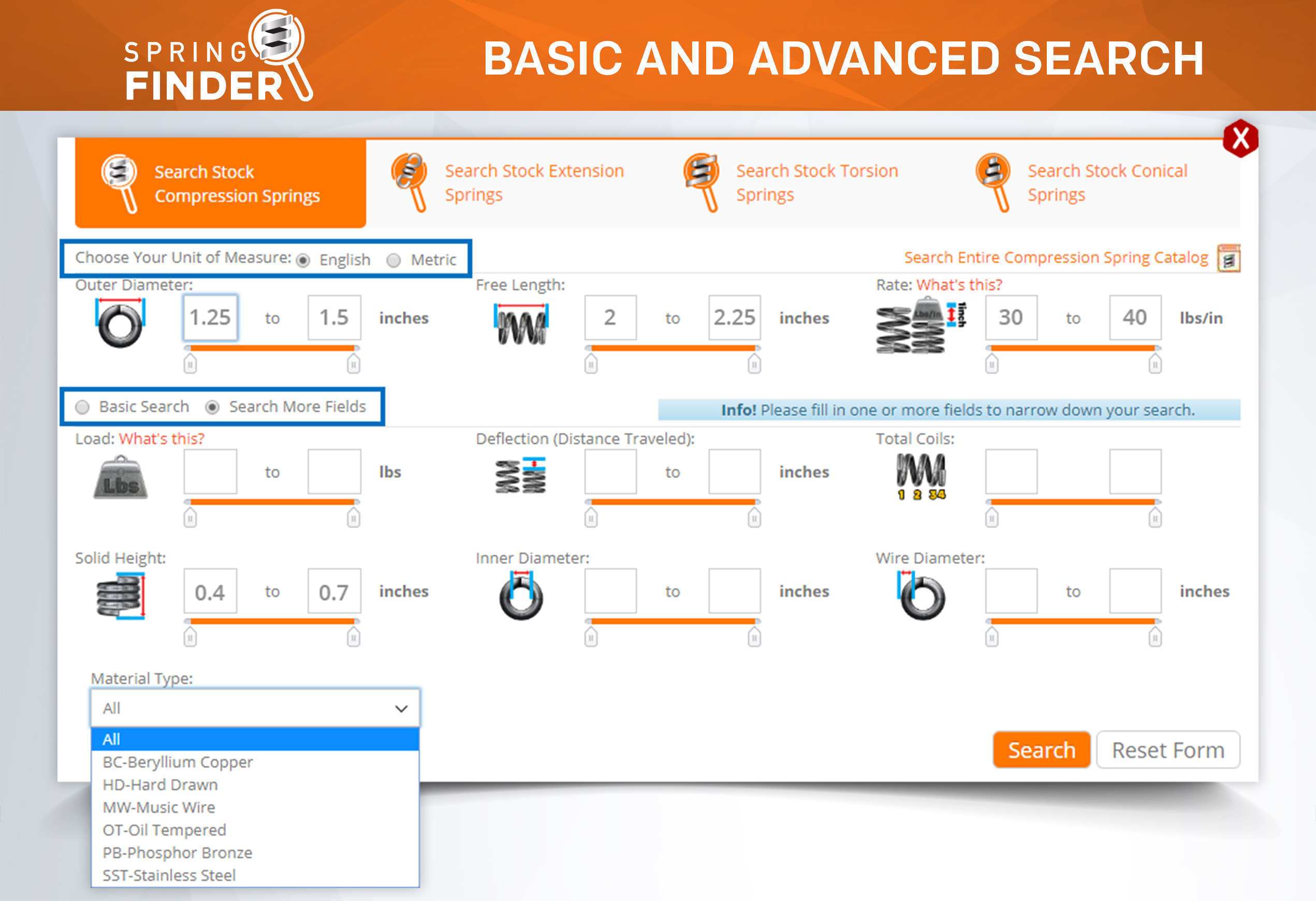
Step 1: Access the Tool

Begin by navigating to The Spring Store’s website. Locate the Spring Finder 5.0 logo prominently displayed on the homepage and click on it to access the tool.


Spring Finder Extension Spring OptionSpring Finder Extension Spring Option

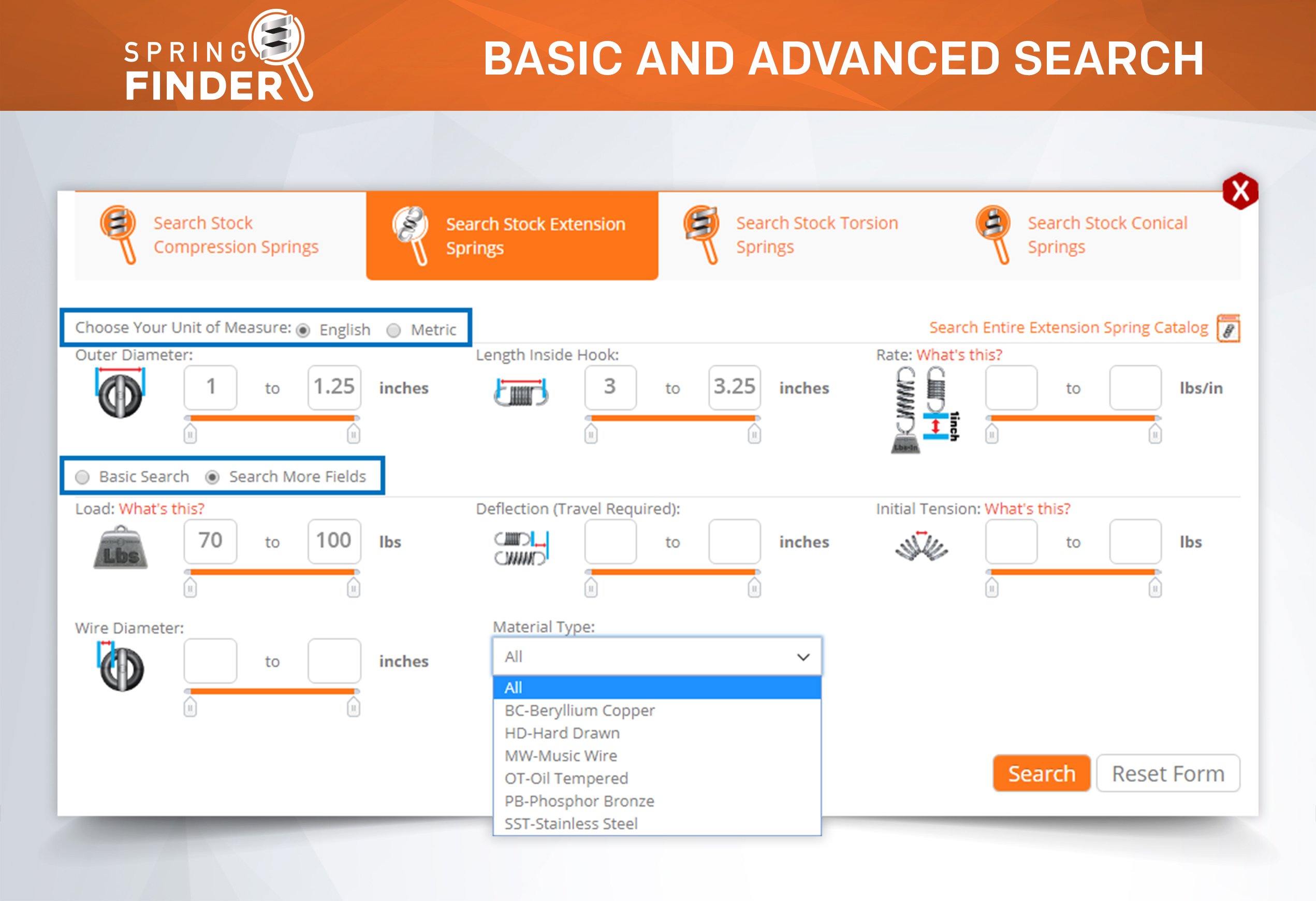
Step 2: Enter Basic Spring Dimensions


Input the essential dimensions of the spring you are looking for. Accurate measurements are crucial for finding the right match.

  • Outer Diameter (OD): Enter 0.5 inches. This is measured across the widest part of the spring.
  • Length Inside Hook: Enter 2.25 inches. This measurement is important as it pertains to how the spring will connect within your trampoline's frame.


Extension spring finder input section optionExtension spring finder input section option

Step 3: Specify Additional Requirements


To narrow down the search and find a spring that meets all your specific needs, specify the following additional requirements:

  • Material Type: Select Stainless Steel. Stainless steel springs are chosen for their excellent durability and resistance to corrosion, making them ideal for outdoor trampoline use.
  • Load Requirements: Specify that the spring must handle a maximum load force of 5.4047 pounds with a maximum safe deflection of 4.4047 inches. This ensures the spring can safely accommodate the forces exerted during trampoline use.


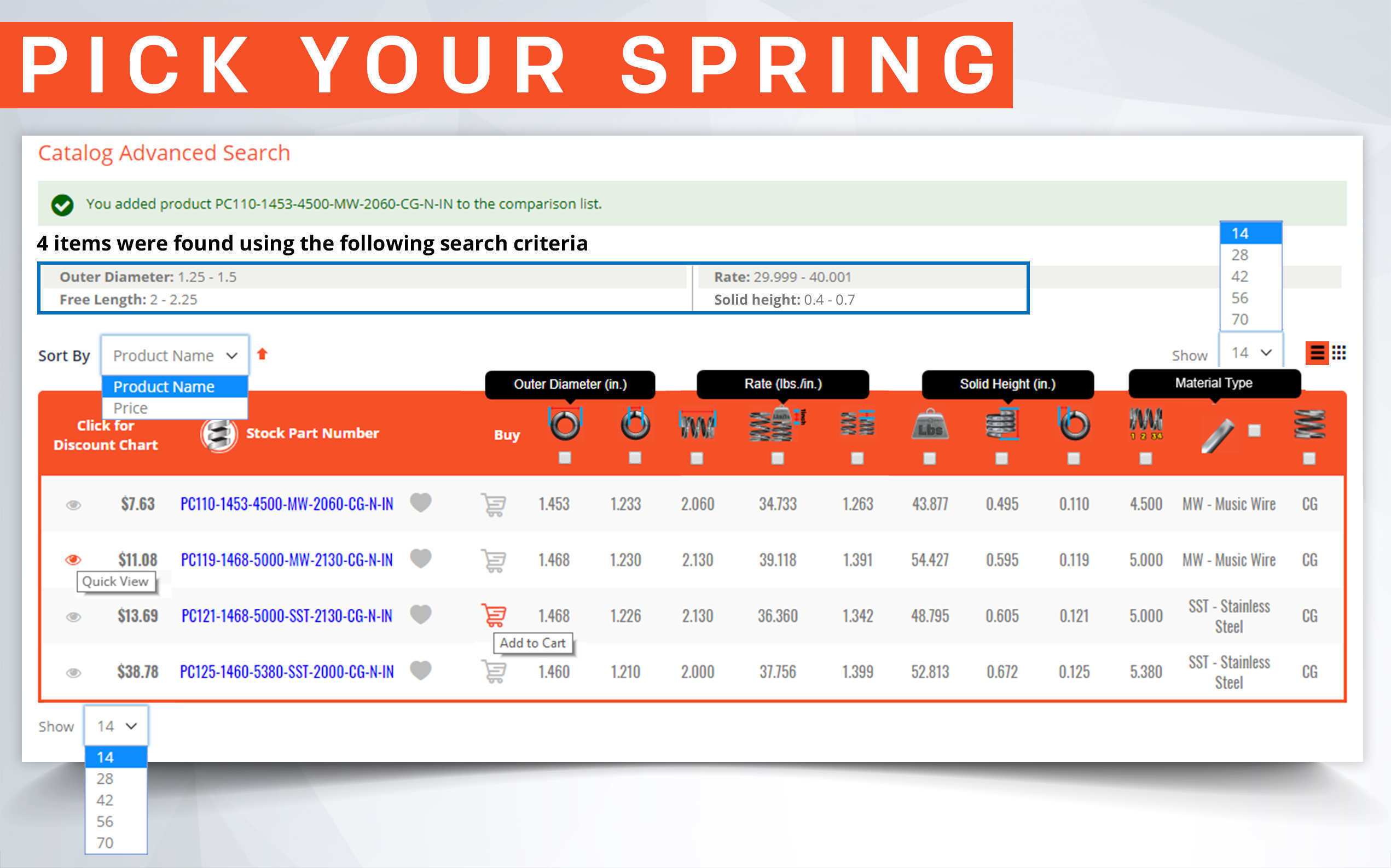
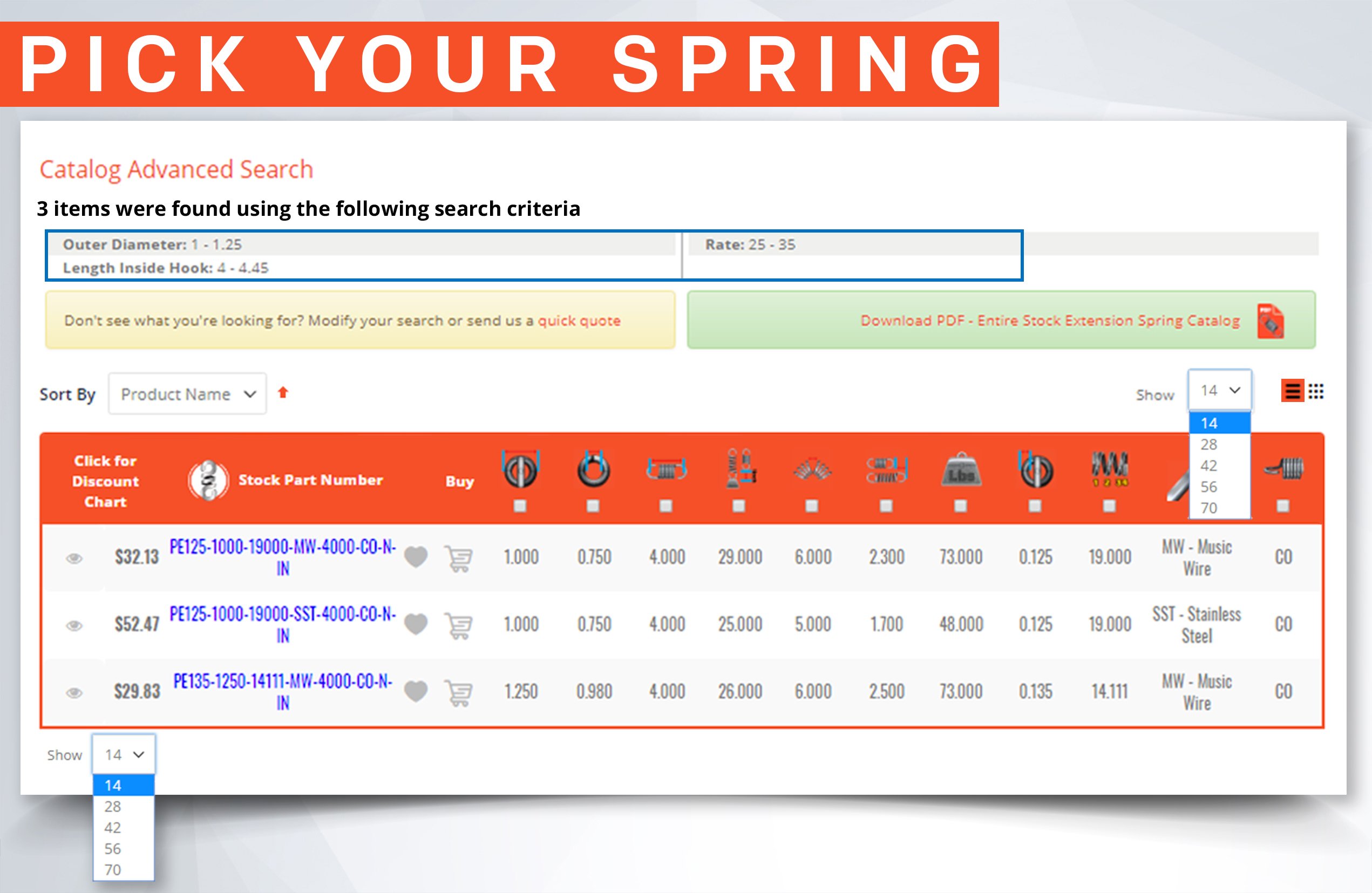
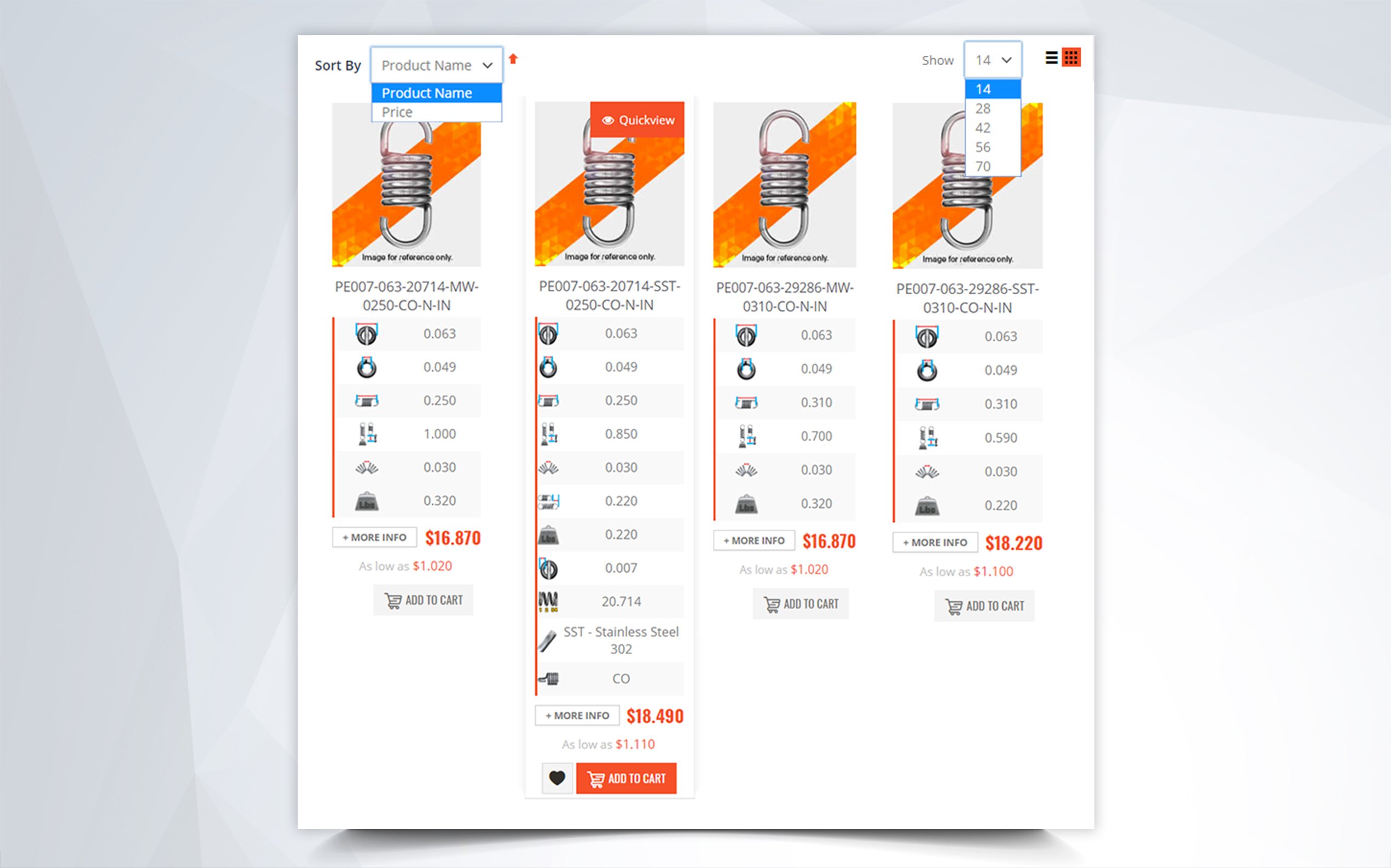
Step 4: Review Results, Compare and Filter Options


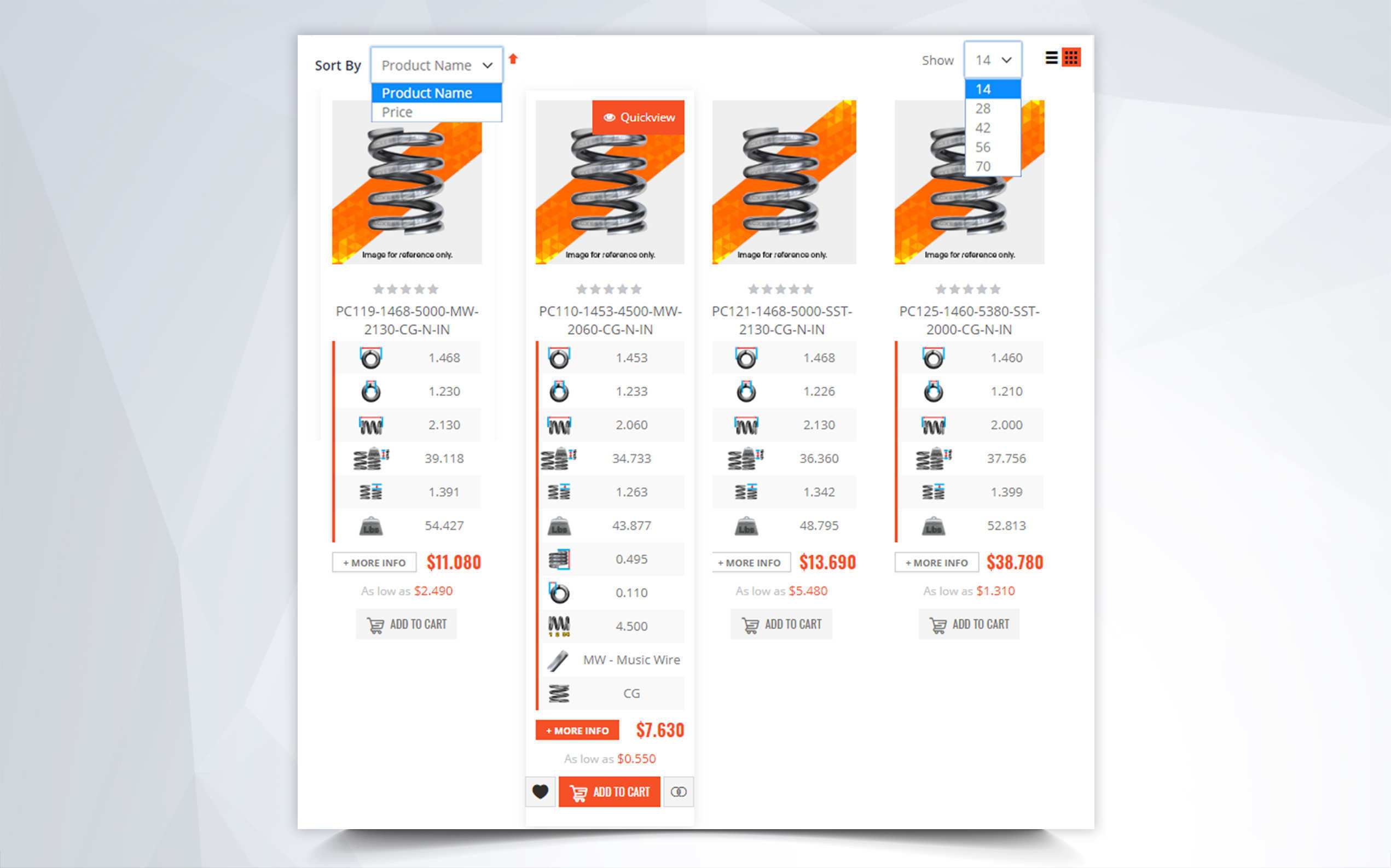
After entering the basic and additional requirements, Spring Finder 5.0 will generate a list of springs that match your criteria. Review each option carefully:

  • Spring Rate (k): Ensure the spring rate is around 1.085 lb/in to provide the necessary bounce and support.
  • Material Type: Confirm that the material is Stainless Steel for durability.
  • Hook Type: Verify that the spring features a Crossover Hook to ensure stable placement and secure attachment.


Extension spring finder input section optionExtension spring finder input section option

Step 5: Select Option


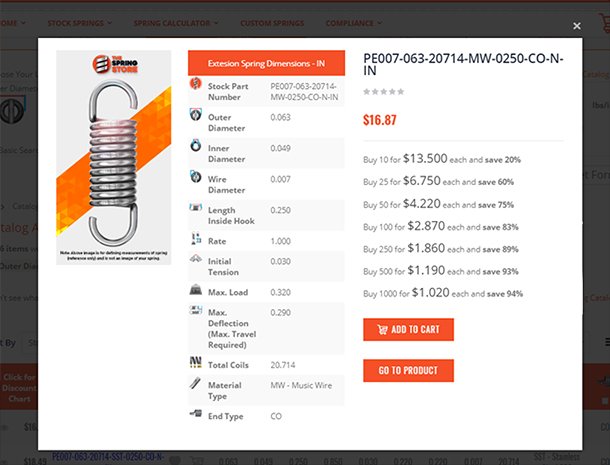
In this case, the filters narrowed our search to Stock Part Number PE041-500-33488-SST-2250-CO-N-IN, that would be the right spring for your trampoline.


PE041-500-33488-SST-2250-CO-N-IN blueprint specsheetPE041-500-33488-SST-2250-CO-N-IN blueprint specsheet
PE041-500-33488-SST-2250-CO-N-IN 3d view cad filePE041-500-33488-SST-2250-CO-N-IN 3d view cad file

Step 7: Test with Online Spring Force Tester


Before finalizing your selection, it's crucial to verify that the chosen spring will perform as expected in your trampoline design. Use Acxess Spring's Online Spring Force Tester:

  • Access the Tool: Navigate to the Online Spring Force Tester from the product view.
  • Verify Specifications: From Online Spring Force Tester we can review spring's details, such as max. load (5.405 lb), spring rate (1.085 lb/in), maximum deflection (4.405 inches) and initial tension of 0.626 lbf, adding the missing piece of information you need to calculate the Total Force for your trampoline.


extension spring design - rate sectionextension spring design - rate section


Total Force = (3.74325 lb/in + 0.626 lbf) × 20 springs

Total Force = 4.36925 lbf × 20 springs

Total Force = 87.385 lb

  • Simulate Behavior: Visually simulate the spring's behavior under different loads and extensions to ensure it meets your trampoline's performance requirements.


PE041-500-33488-SST-2250-CO-N-IN OSFTPE041-500-33488-SST-2250-CO-N-IN OSFT


This step is crucial for verifying that the extension spring will function correctly within your trampoline, providing the desired bounce and safety.


Step 8: Check Real-Time Availability


Most of Acxess Spring's inventory is in stock and ships the same day if ordered before the cutoff time. This information is vital for timely project planning, especially if you are working on a tight schedule.


Step 9: Download CAD Models


For precise integration into your trampoline design, download the 3D Extension Spring CAD models of the selected spring. This facilitates accurate fitting and allows for further simulations or modifications if necessary, ensuring the spring fits perfectly within your trampoline's structure.


Step 10: Place Your Order


Once you've verified the spring's performance and availability, proceed to place your order directly through The Spring Store's website. If your project requires a custom solution, utilize Spring Creator 5.0 to design a custom spring tailored to your specific needs. Ensure all specifications match your requirements before finalizing the purchase to avoid any discrepancies.


Step 11: Utilize Educational Resources and Support


If you encounter any challenges or need additional guidance during the selection process, take advantage of Acxess Spring's educational resources and support services. Their technical information tutorials and support team can provide invaluable assistance in understanding how to measure and select the right springs, ensuring your trampoline project is both successful and safe.


Final Selection and Installation


After following the above steps, you have identified the ideal extension spring for your trampoline:

  • Part Number: PE041-500-33488-SST-2250-CO-N-IN
  • Specifications: As detailed above, including wire diameter, spring rate, maximum deflection, material type, and initial tension.

Installation Tips:

  1. Secure Attachment: Use the Crossover Hooks to attach the springs securely to the trampoline mat and frame, ensuring stable placement and preventing accidental detachment during use.
  2. Proper Alignment: Align the springs correctly to distribute the load evenly across all springs, maintaining the trampoline's balance and performance.
  3. Safety Checks: Regularly inspect the springs for any signs of wear or damage, replacing them as necessary to maintain the trampoline's safety and functionality.


Additional Considerations


  • Material Selection: For trampolines used outdoors, stainless steel springs like the one selected are preferable due to their resistance to corrosion, ensuring longevity even in harsh weather conditions.
  • Safety Factors: Incorporate a safety margin to account for dynamic loads and repeated use, ensuring the springs do not fail under normal operating conditions. This means selecting springs that can handle slightly more than the maximum expected load and the maximum deflection. Why? Because one must NEVER go past the maximum load or the maximum deflection travel, for if one does, the tension spring will take a permanent set or worse the spring can break. 
  • Installation: Proper attachment using crossover hooks to go over pins or rods that have approximately the same diameter as the inner diameter of the hooks. This enhances the security and stability of the springs, preventing accidental hook breakage or detachment during use. Ensure that all connections are tight and that the springs are evenly distributed around the trampoline frame.

By carefully considering these additional factors, you can further enhance the safety and performance of your trampoline, providing a reliable and enjoyable experience for all users.


Maintenance and Safety


Proper maintenance and adherence to safety practices are vital to ensure the longevity and safe operation of tension springs. Neglecting these aspects can lead to spring failure, posing risks to both equipment and personnel. This section outlines essential maintenance tips and safety guidelines to help you keep your tension springs in optimal condition.

Inspecting Tension Springs

Regular inspections help identify signs of wear, corrosion, or damage early, preventing potential failures. Key inspection points include:

  • Coil Integrity: Examine the coils for any signs of breaking like cracks or deformation of the hooks. Damaged coils can compromise the spring's ability to function correctly, leading to inconsistent performance or sudden failure.
  • Hook Condition: Inspect the hooks for bending, cracking, or deformation of the hook. Since hooks are often the weakest part of the spring, any signs of wear here can be critical indicators of potential failure.
  • Surface Corrosion: Look for rust or other forms of corrosion, especially in springs exposed to harsh environments. Corrosion can weaken the material, reducing the spring's strength and flexibility.
  • Uniformity of Coils: Ensure that the coils remain uniform without excessive stretching or flattening. Uneven coils can affect the spring's performance and lead to premature wear.
  • Inspection Frequency: The frequency of inspections depends on the application's intensity and the environmental conditions. For high-stress applications or harsh environments, more frequent inspections are necessary to catch issues early.


Preventing Hook Failure

extension spring failureextension spring failure


Hooks are often the weakest part of tension springs, making their integrity crucial for the spring's overall performance and safety. To prevent hook failure:

  • Proper Selection: Choose springs with appropriate hook types and sizes for the intended load. Ensuring that the hooks are designed to handle the expected forces reduces the risk of failure.
  • Avoid Overloading: Ensure that the applied forces do not exceed the spring’s rated capacity. Overloading can cause hooks to bend or break or distort, leading to sudden spring failure.
  • Regular Maintenance: Inspect hooks regularly for signs of wear or damage. Replace springs that show any signs of deterioration to maintain system integrity.
  • Alternative Fastening Methods: Consider using springs without hooks and fastening them onto screws or bolts. This approach eliminates the weakest link which is the hooks enhancing the spring's durability and reducing the likelihood of failure.

By taking these preventive measures, you can significantly reduce the risk of hook failure, ensuring the longevity and reliability of your tension springs.


Safe Installation Practices


Ensuring safe installation practices minimizes the risk of accidents and extends the spring's lifespan. Here are some key guidelines to follow:

  • Secure Attachment: Ensure that both hook  ends of the spring are securely attached to prevent sudden releases, which can cause injury or damage to equipment. Double-check all connections and fastening points before use.
  • Proper Alignment: Align springs correctly to distribute loads evenly and prevent uneven wear. Misaligned springs can lead to increased stress on certain coils or hooks, accelerating wear and reducing the spring's effectiveness.
  • Use of Protective Gear: When handling heavy springs, use appropriate protective gear to avoid injuries. This includes gloves to protect your hands and safety glasses to shield your eyes from potential debris.
  • Following Manufacturer Guidelines: Adhere to the manufacturer's installation instructions and load specifications. Manufacturers provide detailed guidelines to ensure that springs are installed correctly and operate safely within their designed parameters.
  • Training and Education: Ensure that anyone involved in installing or maintaining tension springs is adequately trained and understands the safety protocols. Proper training reduces the likelihood of improper installation and associated risks.

By following these safe installation practices, you can enhance the performance and safety of your tension springs, ensuring they operate reliably and without incident.


Wrapping It All Up: Your 5 Key Takeaways on Tension Springs


Tension springs, or extension springs, are essential components that play a vital role in a wide array of applications, from everyday household items to complex industrial machinery. Understanding their characteristics, applications, and the principles governing their operation is crucial for selecting the right spring for any given task. Here are five key takeaways from this guide:

  1. Versatility and Importance: Tension springs are incredibly versatile, finding applications in automotive systems, trampolines, upholstery, tooling, and much more. Their ability to resist pulling forces and return to their original shape makes them indispensable in both everyday items and specialized equipment.
  2. Critical Characteristics: Key characteristics such as design and structure, materials used, hook types, and size and dimensions significantly influence a tension spring's performance and suitability for specific applications. Understanding these factors is essential for making informed selection decisions.
  3. Fundamental Physics: The operation of tension springs is based on Hooke’s Law, which relates the force exerted by the spring to its displacement. Mastering the formulas and calculations associated with tension springs enables accurate selection and ensures that springs perform as intended without failure.
  4. Practical Application: Real-world examples, such as trampoline springs, illustrate how tension springs are applied effectively across various scenarios. These examples highlight the importance of selecting the right spring constant and ensuring proper installation for optimal performance.
  5. Maintenance and Safety: Regular maintenance and adherence to safety practices are crucial for ensuring the longevity and safe operation of tension springs. Inspecting for signs of wear, preventing hook failure, and following safe installation guidelines help maintain spring integrity and prevent accidents.

Take advantage of Acxess Spring's innovative solutions to enhance the functionality and reliability of your projects. Visit Acxess Spring today to explore our comprehensive selection and utilize our advanced tools for all your tension spring needs. Making the right choice in tension springs not only enhances the performance of your projects but also ensures long-term reliability and safety.

By understanding the intricacies of tension springs and utilizing the right tools and practices, you can achieve optimal performance in your applications, whether you're working on a simple DIY project or managing complex industrial machinery. Embrace the power of tension springs and let Acxess Spring help you find the perfect solution for your needs.