




Spring Loaded Applications
Springs take part in the design and mechanism of many modern-day applications. They are able to automatize and provide stability to many products. Need something on a certain device or application to bounce back after being pushed/torqued; or perhaps you’re looking for something that’ll compress/pull back after being pulled. With springs, you’re able to do all of that. There are three different basic types of springs which are, compression springs, extension springs, and torsion springs. There are several custom variations of these springs which are changed in shape to fulfill certain needs but these are the main ones which the other custom spring types are derived from.
Click here to get Instant Spring Quote (ISQ) of your custom spring!
Below you will find a small assortment of spring loaded applications just so you can get an idea of how much these springs are able to do for you.
Compression Spring Application
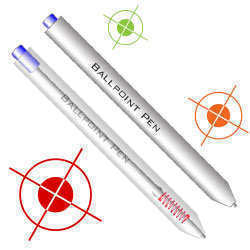
Spring Loaded Pen
Ballpoint pens are spring loaded devices. When you click on the top button of a ballpoint pen, a compression spring is being compressed so when you let go of this “button”, it returns to its original position. Some pens have a smaller button on the side so that, when the pen is out, you can trigger the spring to push the spring back into the pen. This smaller button works as a pin which holds the spring down when it is compressed so that the pen will stay sticking out of the mechanism. It is the “load” keeping the spring compressed so, when that load is released, the spring automatically expands back to its free length thus returning the pen back into the inside of the tube.
Extension Spring Application
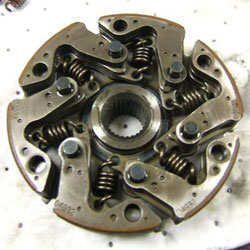
Spring Loaded Clutches
Centrifugal clutches are spring loaded by extension springs. These springs are used to hold the clutch’s legs inward until the centrifugal force (exceeding the force of the pre-loaded extension springs) changes the clutch’s position due to the change in speed. This is due to the fact that the engine’s speed dictates the position of the clutch and the centrifugal force used to automatically engage the clutch when the rpm’s get to high or to disengage the clutch when they get too low. If the centrifugal force exceeds the extension springs’ force, it’ll make the clutch’s legs reach into contact with the bell thus driving the output.
Torsion Spring Application
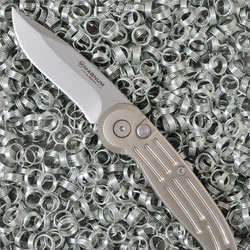
Spring Loaded Knives
Spring loaded knives are also known as switchblades. There are two types of switchblades but, in this case, we will talk about the one that swings out instead of the one that is ejected/pushed out from the case. Torsional springs are used in this specific application because they work radially; they are torqued, not pushed or pulled. One of the spring’s legs will be stationary while the other leg will be attached to the knife. Under a large amount of pre-torque, the spring will swing out at great speed once the little wedge on its side is pushed inward.