Table of Contents
Choosing the right spring might seem confusing at first, there are many types and materials, but we’ve got you covered. At The Spring Store, we have a huge selection of metal springs for sale (from tiny precision coils to heavy-duty industrial springs) and a user-friendly Spring Finder tool to help you find exactly what you need. In this guide, we'll answer common questions about spring types (compression, extension, torsion, and conical) and spring materials (high carbon, alloy steel, stainless steel), including their properties like working temperatures and corrosion resistance, so you can make an informed decision.
Not all springs work the same way. Knowing the different types of metal springs will help you pick the right one for your project. Here are the most common types of springs you can buy and what they do:


Compression Springs are the most familiar springs, the open-coil type that compresses (squeezes) under load. When you push down on a compression spring, it resists and pushes back. They're used in everything from pens to car suspensions. We offer thousands of compression springs for sale in various sizes and strengths, from light-duty coils to heavy-duty springs for industrial use. If you need a spring that supports a load by shortening (think of a shock absorber or a spring inside a ballpoint pen), a compression spring is what you’re after.


Extension Springs stretch out under load. They usually have hooks or loops on the ends and provide a pulling force when extended. Common uses include trampolines, garage door mechanisms, and anywhere you need a spring that pulls back when stretched. If you’re looking to buy springs that extend (for example, to create tension in a mechanism), extension springs are the solution. We have a wide range of extension springs in stock, so you can easily find stock springs for sale that meet your needed length and tension.


Torsion Springs work by twisting, they exert a force when you rotate their ends (imagine a clothespin spring or the spring on a mousetrap). They’re perfect for applications where you need a rotational force or hinge action. Torsion springs for sale at The Spring Store come in various torque ratings and leg configurations (straight legs, bent legs, etc.) to fit your project. Whether you need a tiny torsion spring for an electronics latch or a larger one for equipment, you can find it in our inventory.


Conical Springs: These are essentially cone-shaped compression springs. Because of their tapered shape (wide at one end, narrow at the other), the coils can nest inside each other as the spring compresses. This allows conical springs to compress to a shorter height than regular springs, great for when you need a lot of travel in a tight space. Conical springs are often used in electrical contacts or battery compartments (ever notice the little spring in a flashlight?). We offer conical springs in different sizes, so if your design has limited space for compression, a conical spring could be your best choice.
Pro Tip: If you're not sure which spring type you need, think about how the spring will work in your application. Does it need to push back when squeezed (compression)? Pull back when stretched (extension)? Twist (torsion)? Or compress into a small space (conical)? Identifying the motion and function will point you to the right category of spring. And remember, our team is always here to help if you have questions, we are a phone call away!
Choosing the right spring material is just as important as choosing the type of spring. The material affects how strong the spring is, how it handles heat, whether it will rust, and how long it will last. Let’s break down the most common spring materials and their properties so you can pick the best option:


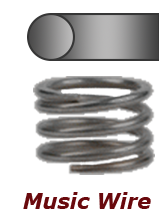
This is the go-to material for many springs. Music wire springs (ASTM A228 steel, often just called spring steel) are the most common type of spring in manufacturing . They are very strong and stiff (thanks in part to a high Rockwell hardness of about C41-60 in spring temper ) which means they can handle a lot of force for their size. Music wire is also relatively economical, giving you high performance without a high price. However, there are two key things to note: (1) Temperature, high carbon steel springs can typically only be used up to about 250 °F (121 °C) before they start to lose strength . (2) Corrosion, music wire is not stainless and will rust if exposed to humidity or moisture . So, if your spring will be in a dry environment at room temperature, music wire is usually an excellent choice (strong, cheap, and widely available). In fact, most stock springs are made from music wire because it offers a great balance of strength and cost for general applications . But if you need a spring to withstand high heat or corrosive conditions, you might need a different material.


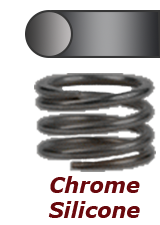
Alloy spring steels are designed for heavy-duty and high-performance springs. The most popular alloy spring material is Chrome Silicon (ASTM A401), and Chrome Vanadium (ASTM A231) is another similar alloy. Springs made from these alloys can handle higher stress and higher temperatures than ordinary high carbon steel. For example, a chrome silicon spring can work at temperatures up to around 475 °F (246 °C ), significantly higher than the music wire’s limit. These materials also have excellent strength and fatigue life, they’re often used in automotive suspension springs, gun springs and performance applications that require enduring heavy loads or impact (imagine the beating a car’s suspension spring takes). In fact, chrome silicon and chrome vanadium are commonly used for large, heavy-duty springs or any spring that needs to perform under repeated high pressure . One thing to keep in mind: like high carbon steel, alloy steels are not inherently corrosion-proof , a chrome silicon spring will still rust if it’s exposed to moisture over time. So, for wet or corrosive environments, you’d either need to coat these springs or consider stainless steel instead. But if you need a high-temperature spring wire or a spring that can handle extreme forces without taking a set , alloy steel springs are a top choice. (They’re basically the “upgrade” from music wire when music wire isn’t quite enough for the job.)


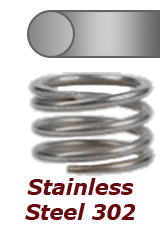
If you need corrosion resistant metal springs, stainless steel is the way to go. Stainless steel springs are perfect for outdoor use, marine environments, medical devices, food equipment, anywhere your spring might get wet or face chemicals, and you don’t want it to rust. The most common spring-grade stainless is Type 302/304 (ASTM A313), which is used in many stock springs. There’s also Type 316 (for extra corrosion resistance in marine/saltwater conditions) and 17-7 PH (for higher strength applications). What are the trade-offs? Stainless steel can handle much higher temperatures than music wire, often up to 500–550 °F (260–288 °C) for 302/316 stainless. That makes stainless ideal for high-temperature environments where spring steel would fail. However, stainless is a bit less strong (lower tensile strength) than music wire. (Surprising, right? Contrary to popular belief, music wire is actually stronger than stainless steel in terms of sheer strength) In practical terms, this means a stainless steel spring might need to be a little larger or thicker to handle the same load a smaller music wire spring could handle. But unless space is extremely tight, this is usually not a big issue, and it’s worth it for the rust prevention. Stainless springs are non-magnetic or slightly magnetic (302/304 are slightly magnetic in spring temper) and they offer great longevity because they won’t corrode in humid or harsh conditions. So, if your spring will face rain, sweat, saltwater, or sterilization, etc., going with stainless steel will give you peace of mind and a longer-lasting spring. Many stock springs for sale on our site are available in stainless steel for exactly this reason.
(Fun fact: the term “music wire” comes from its historical use in piano wires and guitar strings, it’s a very high-tensile, high-carbon steel that just so happens to be perfect for coil springs as well. So when you buy a music wire spring, know that it’s made of the same type of steel that can hold a piano string under tension without snapping!)
By now, you might have an idea of the type of spring and material you need. The next step is actually finding and buying the spring. Fortunately, The Spring Store makes this step straightforward and beginner-friendly. Here are some tips to help you quickly locate the perfect spring for your needs:
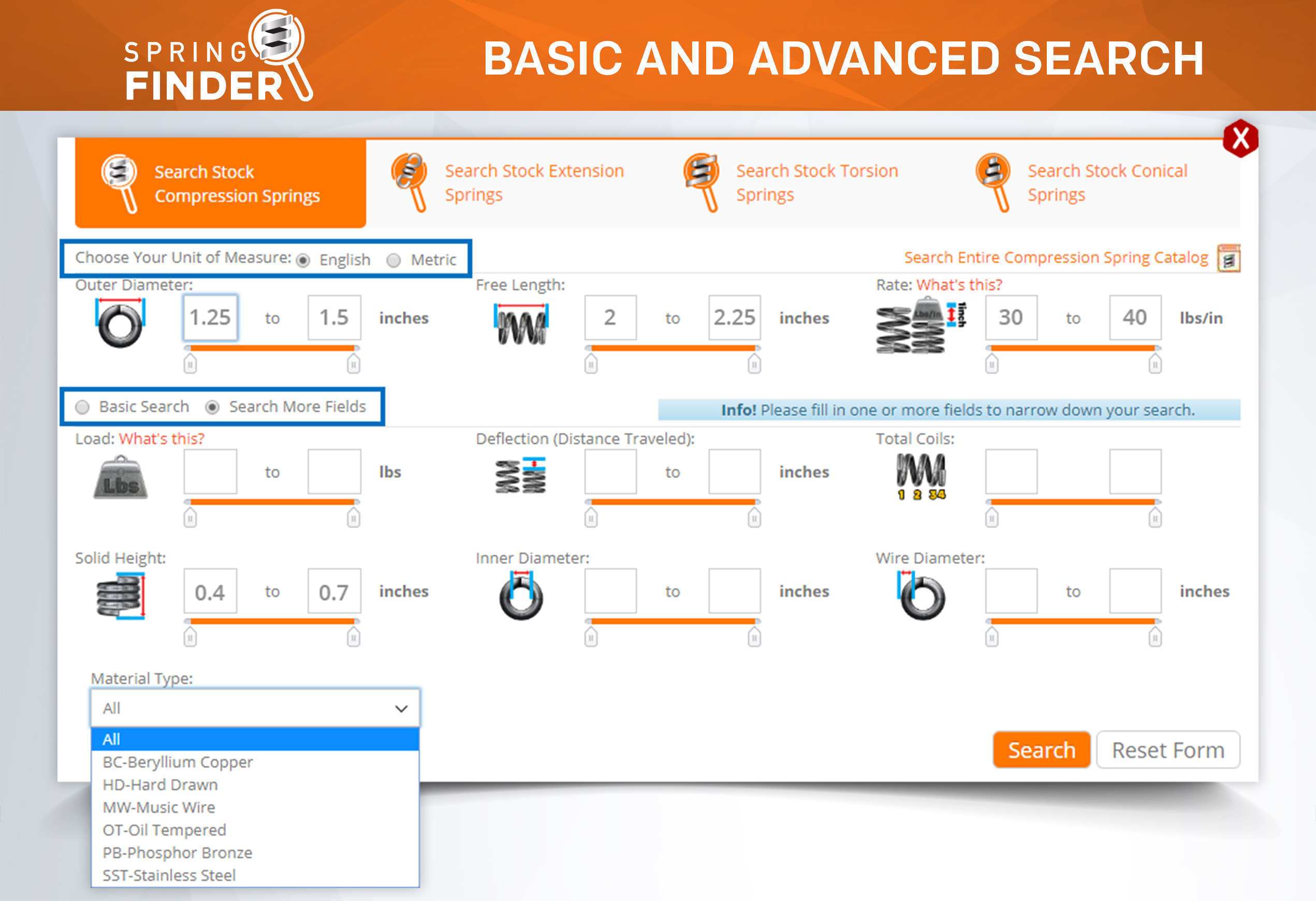
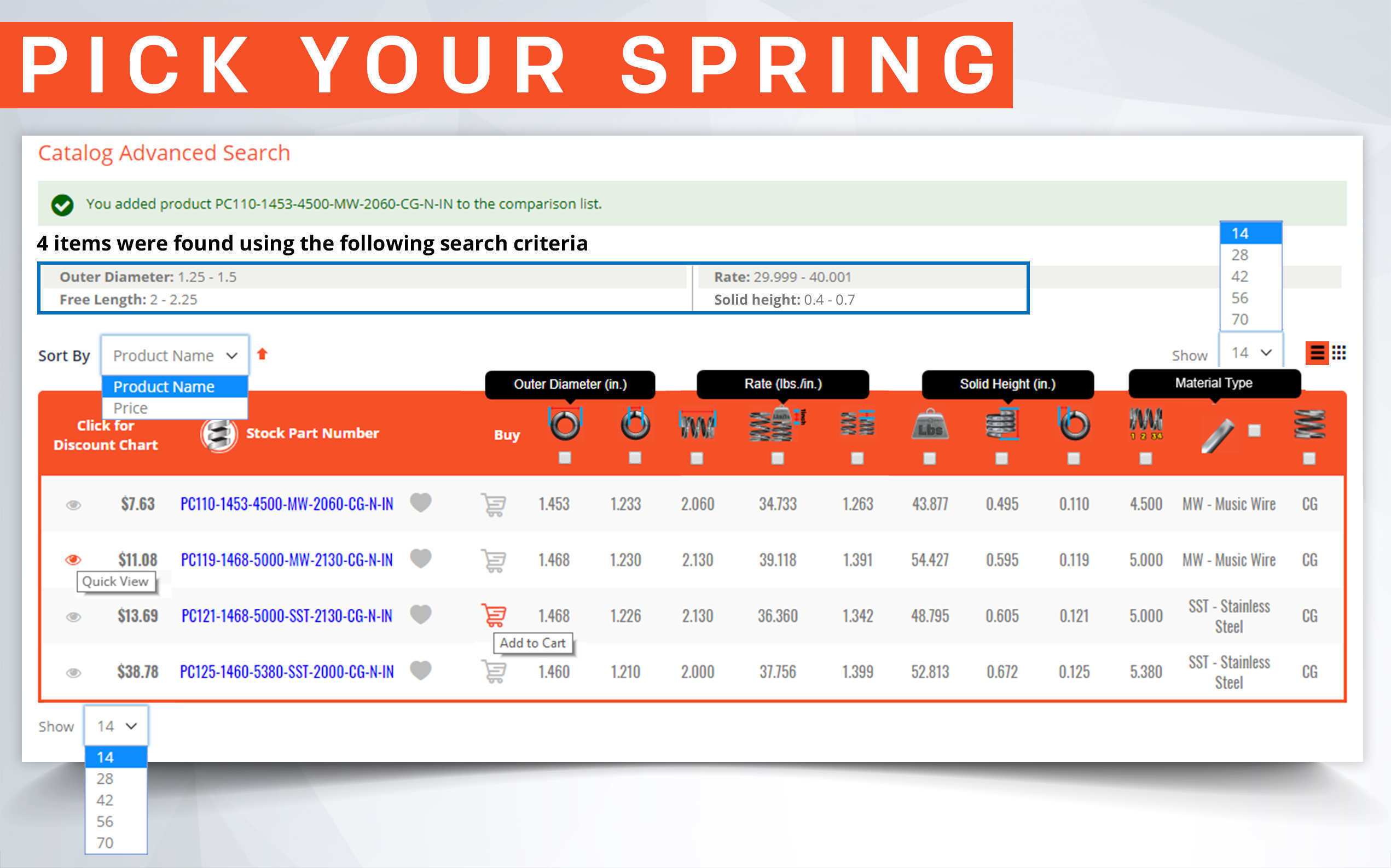
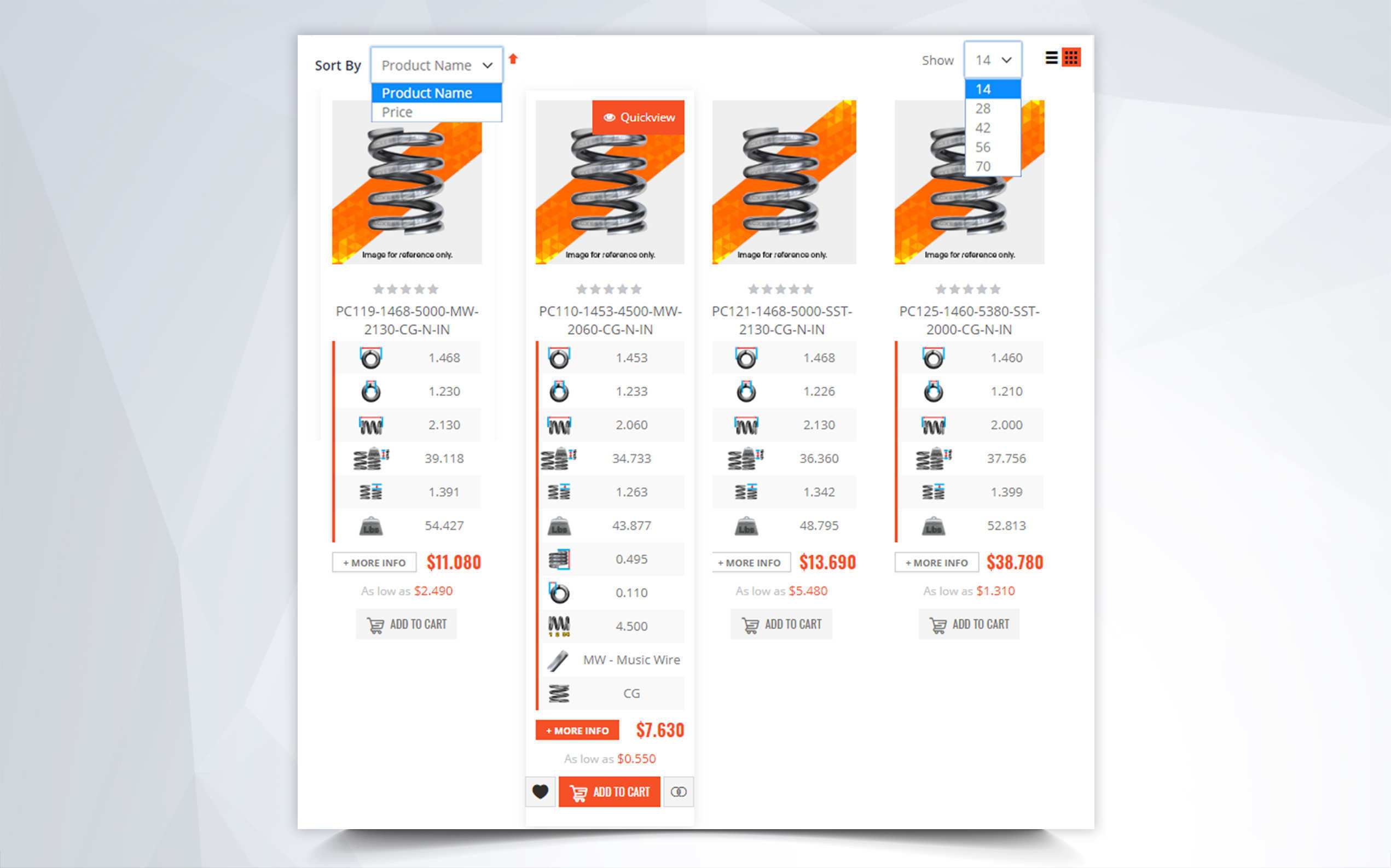
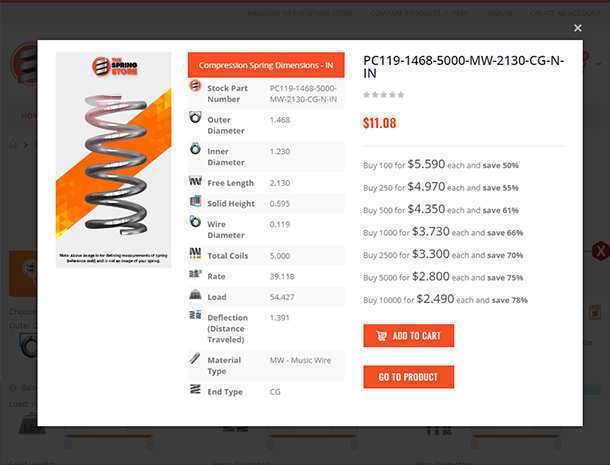
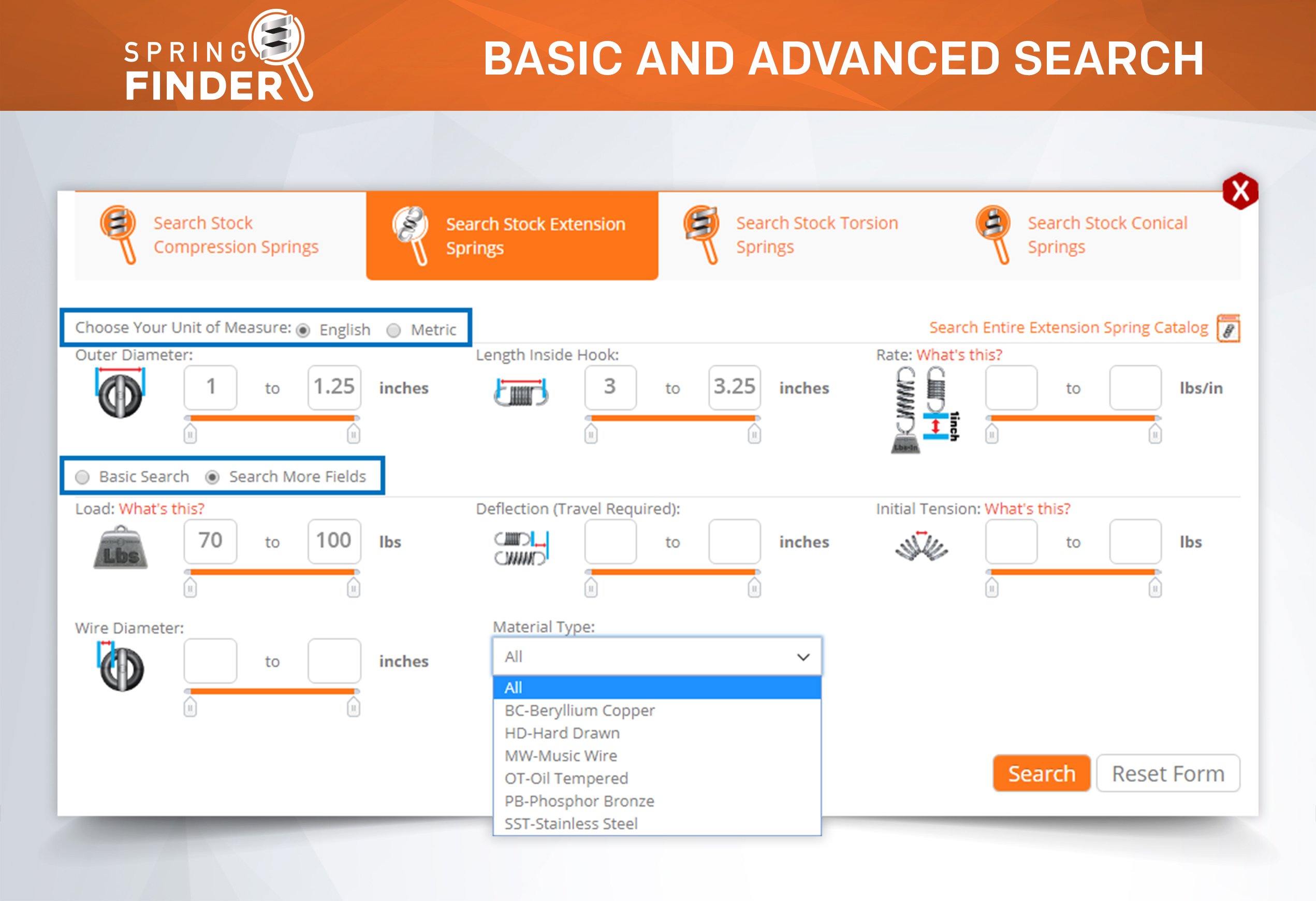
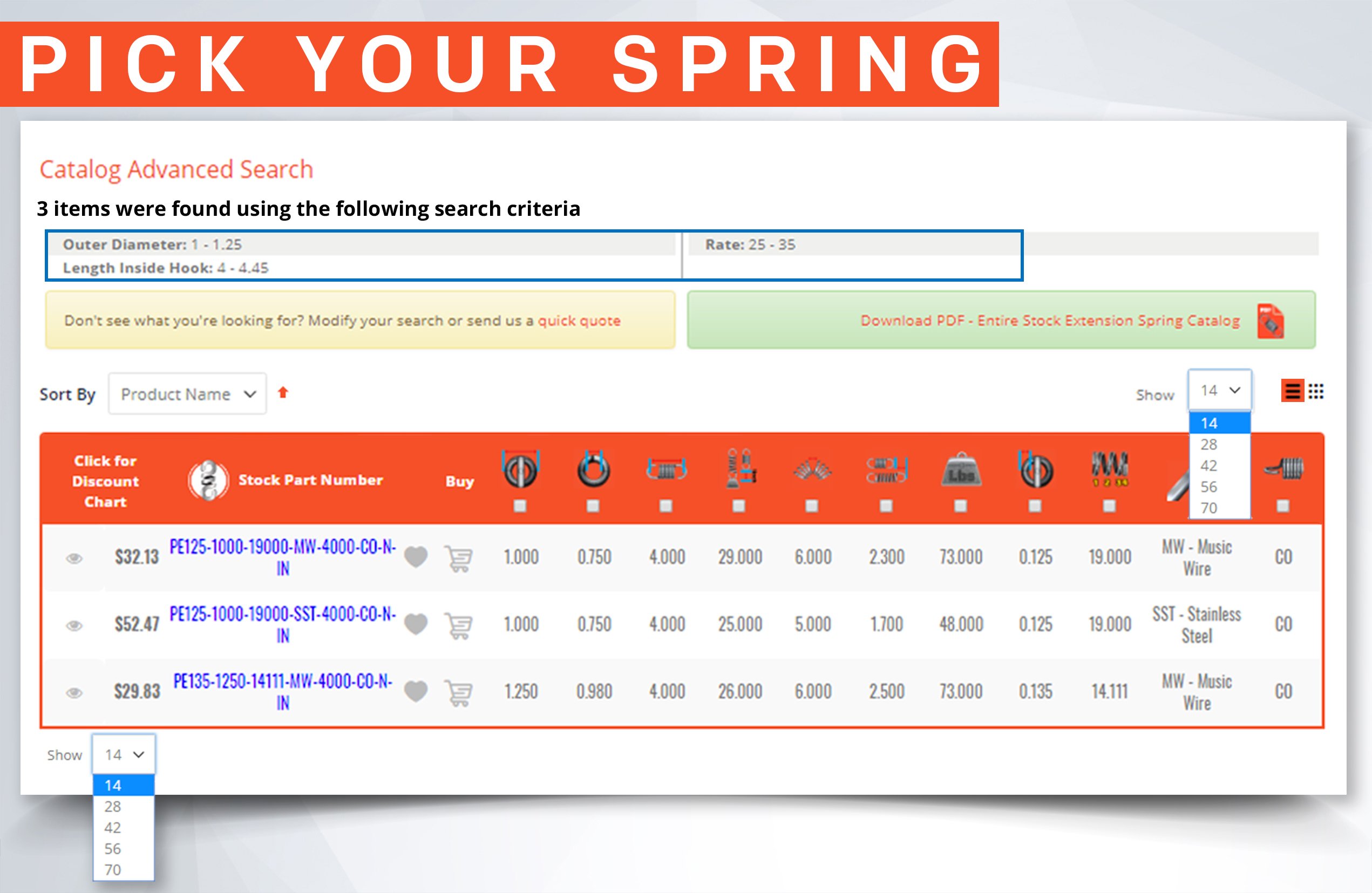
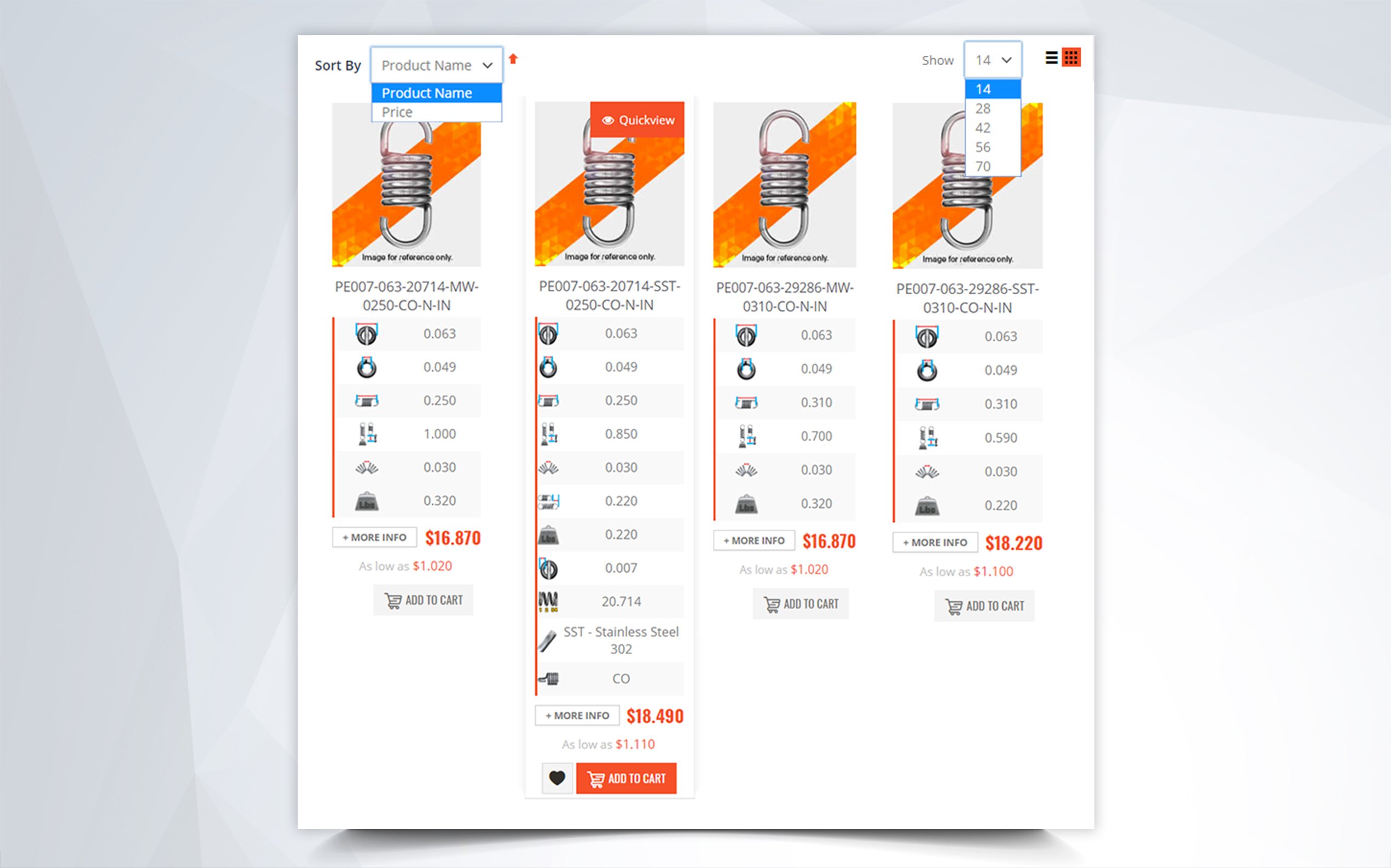
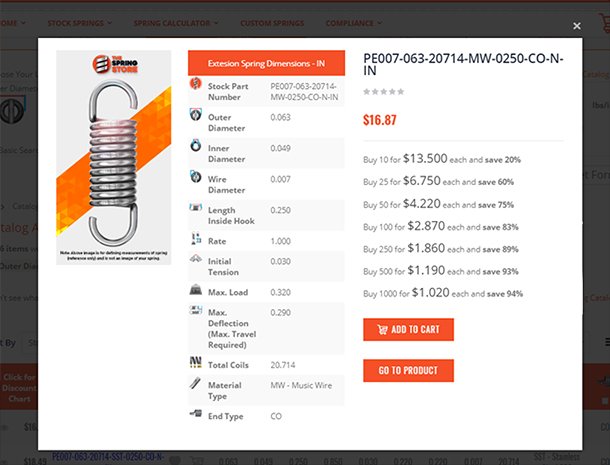
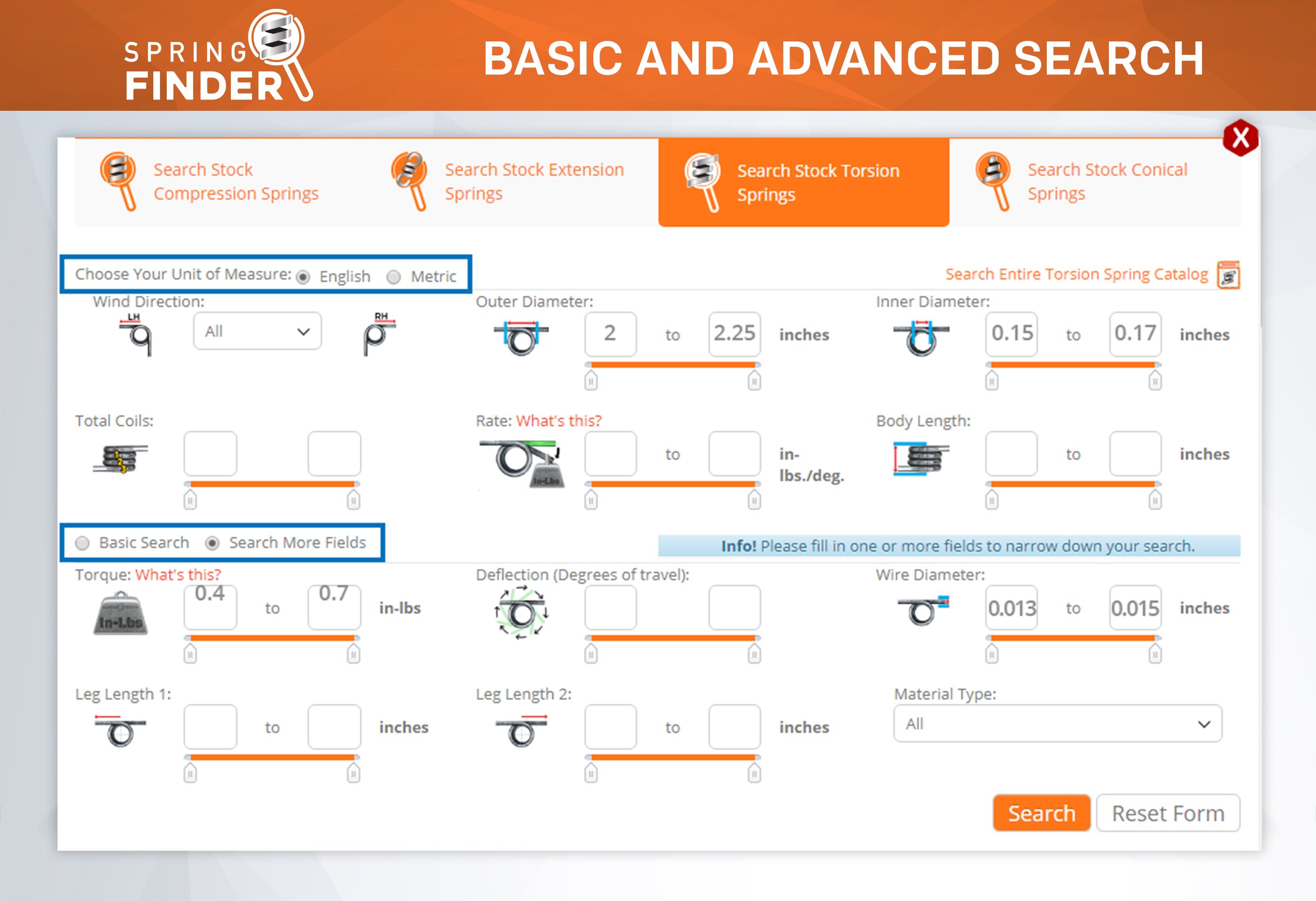
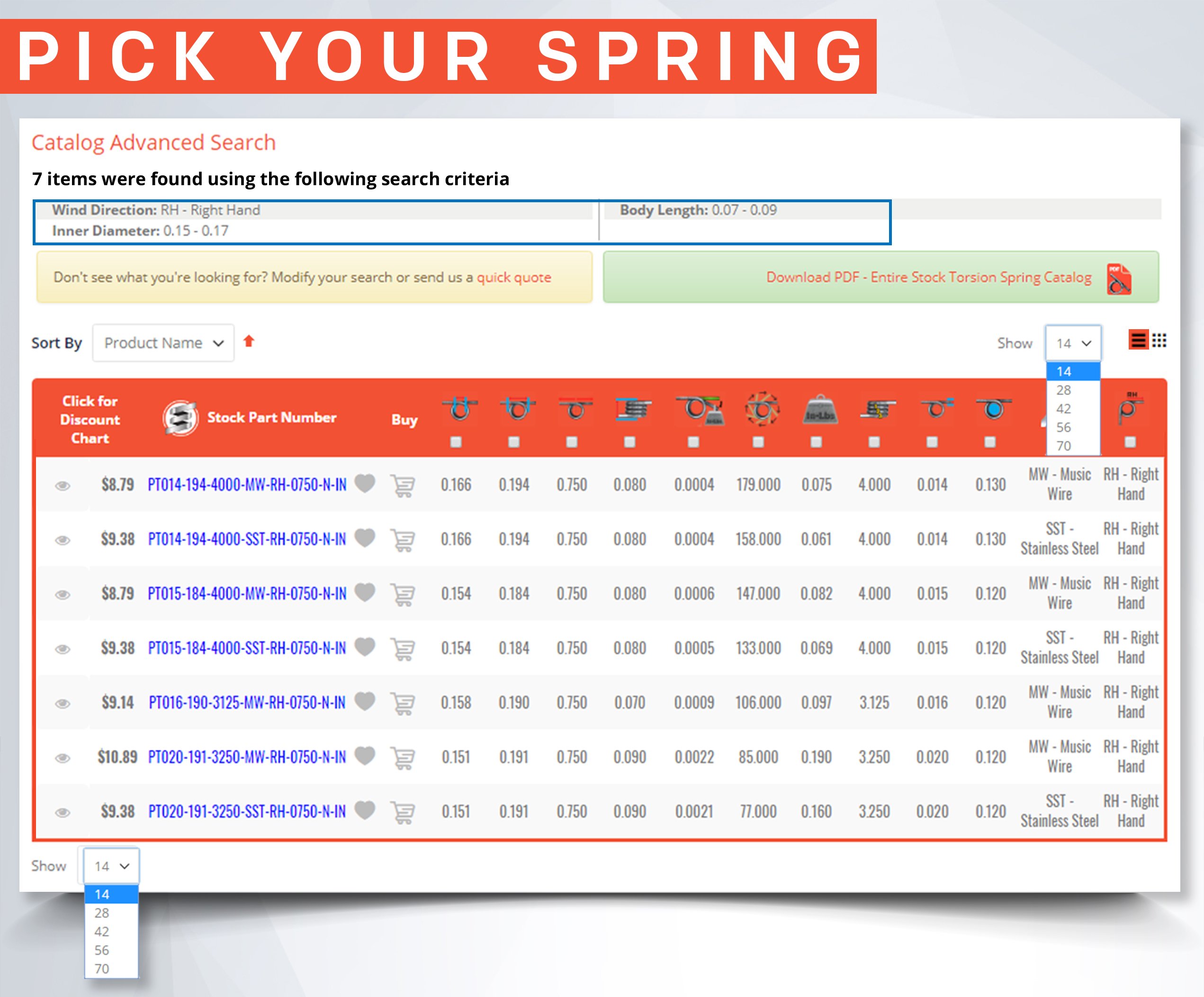
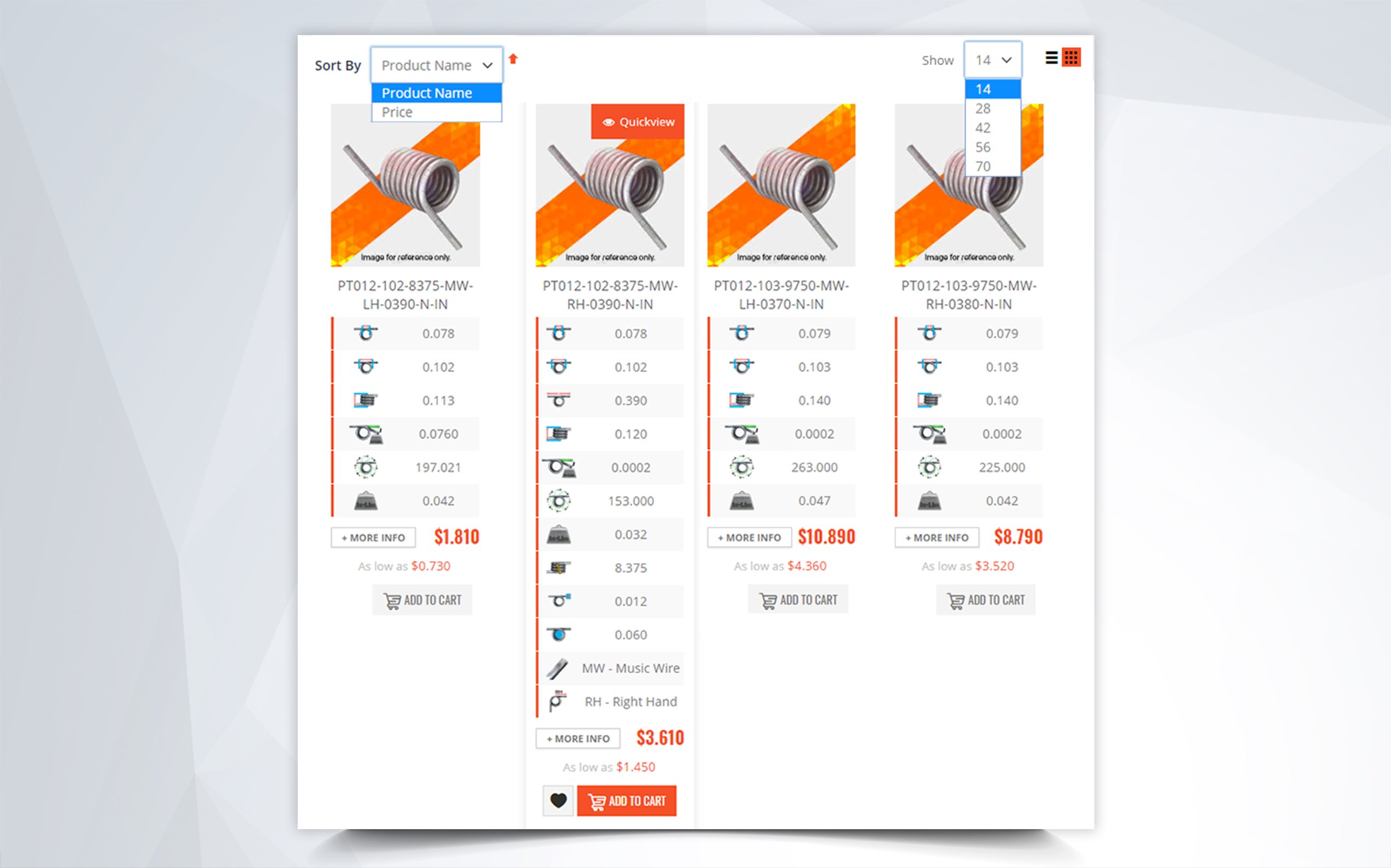
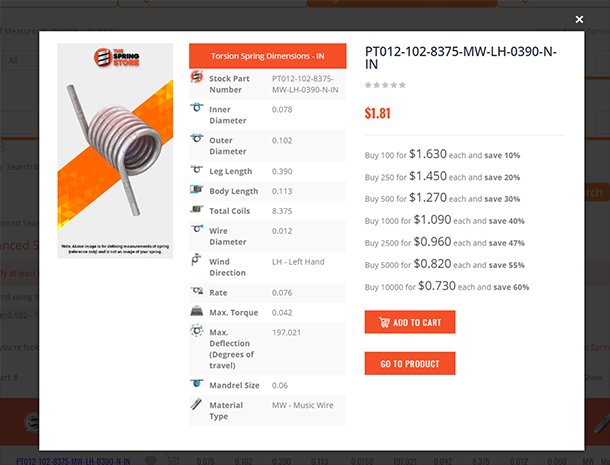
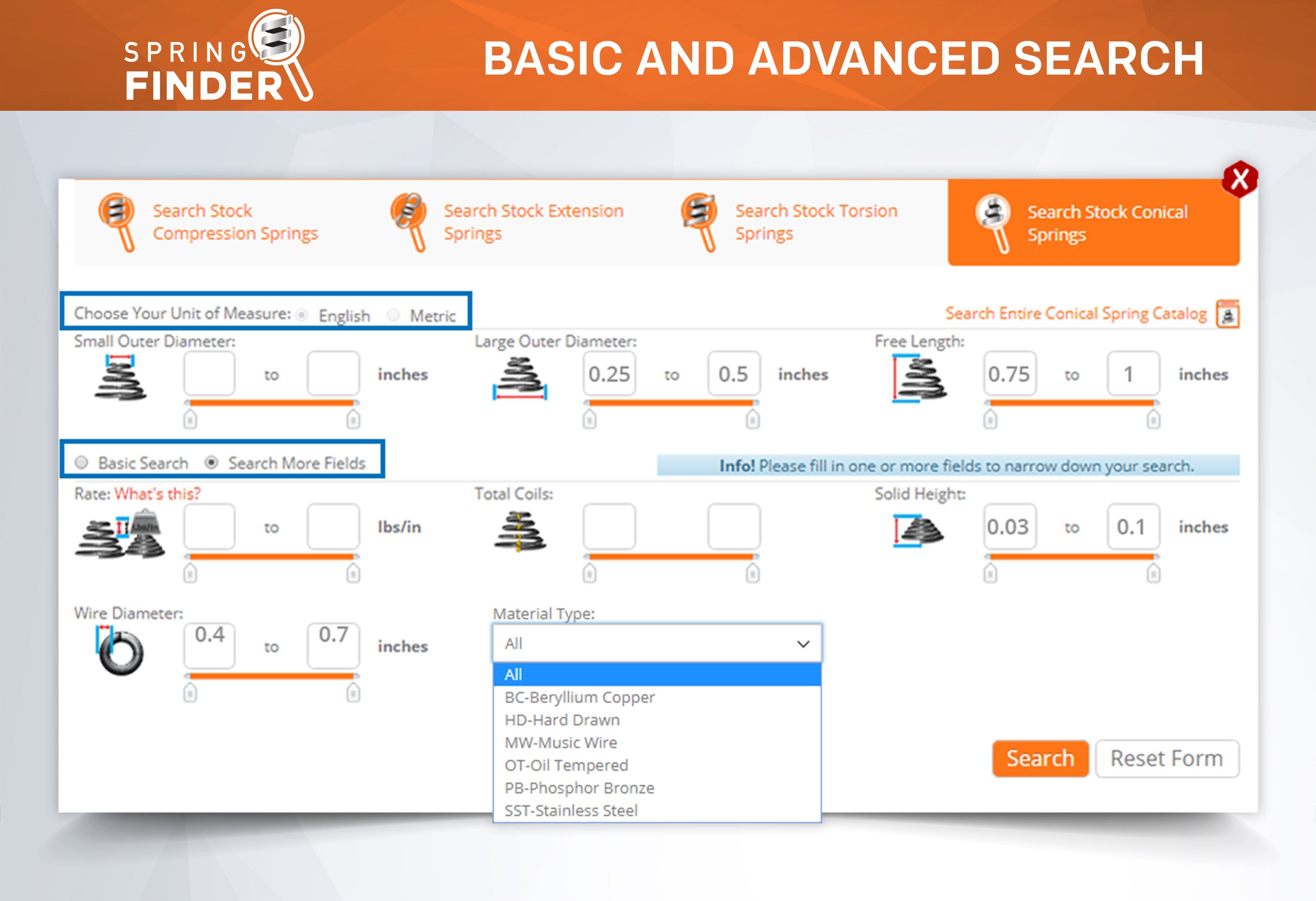
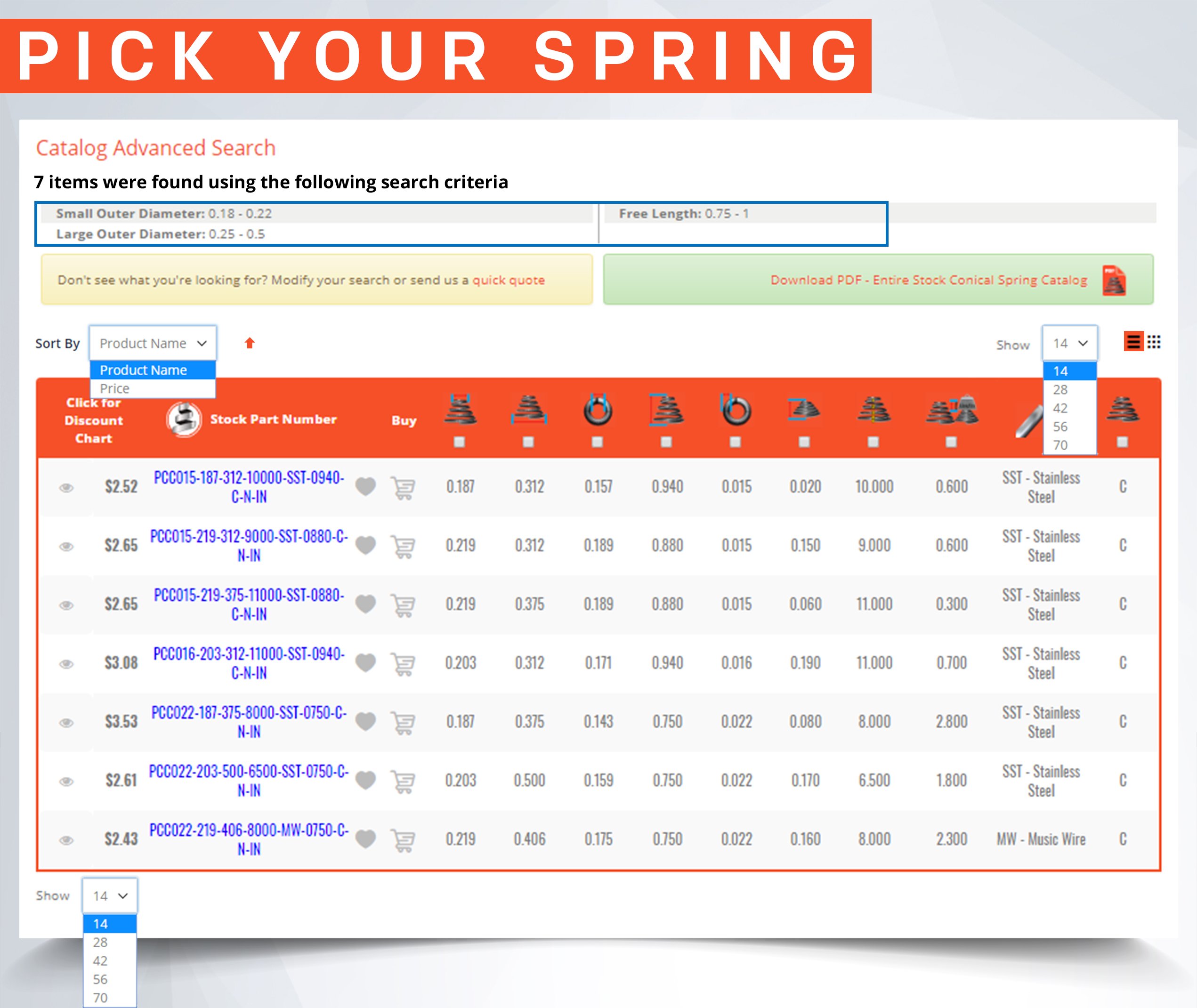
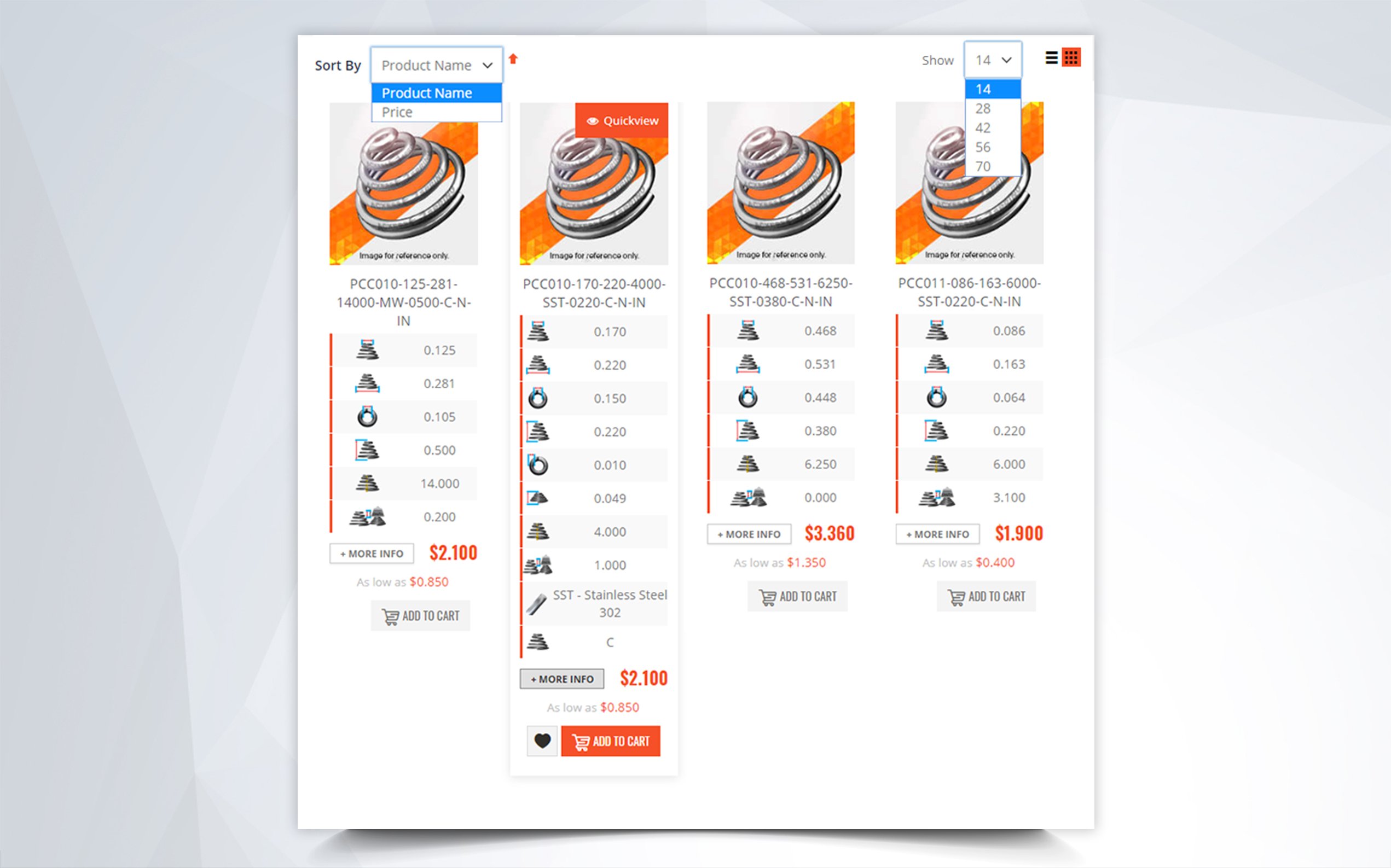
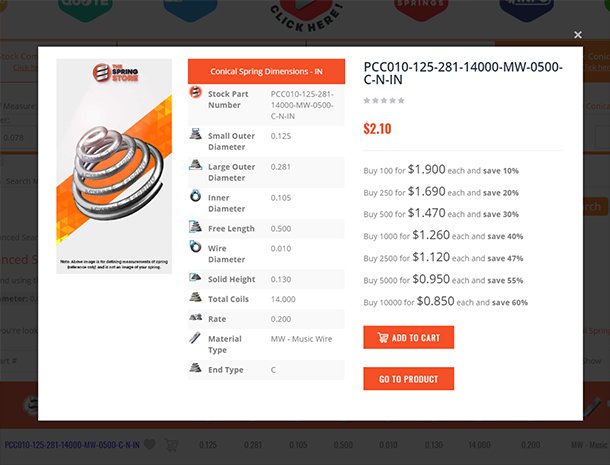
Use our Spring Finder Tool: We’ve built an online Spring Finder (think of it as a smart search engine for springs) to save you time. Instead of browsing through thousands of products manually, you can input your requirements and let the tool do the work. For example, you can select that you want a compression spring, then enter the dimensions you need (like wire diameter, outer diameter, free length) and even specify material or force requirements. Hit "Search" and voilà: you'll get a list of springs that match your specs. The Spring Finder lets you filter by size, material, spring rate, load capacity, and more. This means in seconds you can narrow down from our huge inventory to a handful of ideal choices, simplifying the selection process and saving you time. Many customers tell us it takes the guesswork out of shopping for springs. Give it a try, it’s free to use, and you might be amazed at how quickly you find a match.


Take advantage of our massive stock: One of the benefits of buying from The Spring Store is that we maintain a large inventory of stock springs in many sizes and materials. In fact, we have over 42,000 different compression spring designs in stock. What does that mean for you? Chances are, the spring you need is already made and ready to ship. You can buy metal springs online from our catalog in just a few clicks and have them delivered quickly, instead of waiting weeks for a custom spring to be manufactured. We ship in any quantity – whether you need just one spring for a repair or a thousand springs for a production run, we’ve got you covered. Immediate availability and quick delivery are our specialties. So, using a stock spring from our catalog can save you both time and money.
Consider custom springs if necessary: Sometimes, despite our enormous selection, you might have a unique requirement that a stock spring can’t meet (maybe an odd size, an unusual force requirement, or a special material like an exotic alloy). In that case, don’t worry, we also specialize in custom springs. If you don’t find what you need with the Spring Finder, or you have a design that absolutely requires a custom solution, you can reach out to us for a quote. Our engineers can guide you through the design and material selection for custom springs, and we even have an Instant Spring Quote tool to streamline the process of getting pricing for a custom spring and the Spring Creator to help you design and calculate the performance of your spring. Custom springs give you ultimate flexibility (you can tweak every parameter to meet your exact needs), but they do take a bit longer (and can be higher cost per unit) than stock springs. We’ll help you weigh those options so you get the best value.


Here’s a quick recap of the most important points to remember when you’re looking to buy metal springs:
- Know Your Spring Type: There are four main spring types: compression, extension, torsion, and conical, each suited for different kinds of motion and loads. Choose the type that matches how you need the force applied (compression for push, extension for pull, torsion for twist, conical for tight spaces).
- Choose the Right Material: Spring materials like high carbon steel (music wire), alloy steel (chrome silicon), and stainless steel have different properties. High carbon steel is very strong but limited in heat and can rust; alloy steels handle higher loads and temperatures (up to ~475 °F) but also need rust protection; stainless steel prevents rust and handles heat (to ~550 °F) but is a bit less strong. Match the material to your project’s needs for best performance.
- Consider Environment & Performance Factors: Think about where and how the spring will be used. Corrosion (any chance of humidity, water, or chemicals?) and temperature (operating heat levels) are critical – they will narrow down your material choice (e.g. use stainless for corrosion or an alloy for high heat). Also consider the required strength and lifespan (high-cycle or heavy-duty use may call for a superior material or design). Choosing the right material and spring type upfront will ensure your spring works reliably and lasts longer.
- Leverage Stock Springs for Convenience: Whenever possible, use stock springs for sale from a reputable supplier like The Spring Store. We maintain a huge inventory of ready-made springs, which means faster delivery and lower cost for you (no waiting for manufacturing). Our catalog likely already has the spring you need (we have tens of thousands of designs on hand), so you can get your project going immediately with a proven solution.
- Use Tools and Expert Help: Don’t do it alone – use our Spring Finder tool to quickly filter and find the exact spring that meets your requirements. This saves you time and ensures you get precisely what you need. And if you have any doubts or need a custom spring, contact our spring experts. We’re here to answer questions, provide guidance, or assist with custom designs. Getting the right spring is much easier when you have knowledgeable support and easy-to-use tools at your fingertips.
By keeping these key points in mind, you’ll be well-equipped to find the perfect metal spring for your needs. Happy spring hunting, and remember, we’re always here to help if you need us. Good luck with your project, and we look forward to helping you find the ideal spring!